
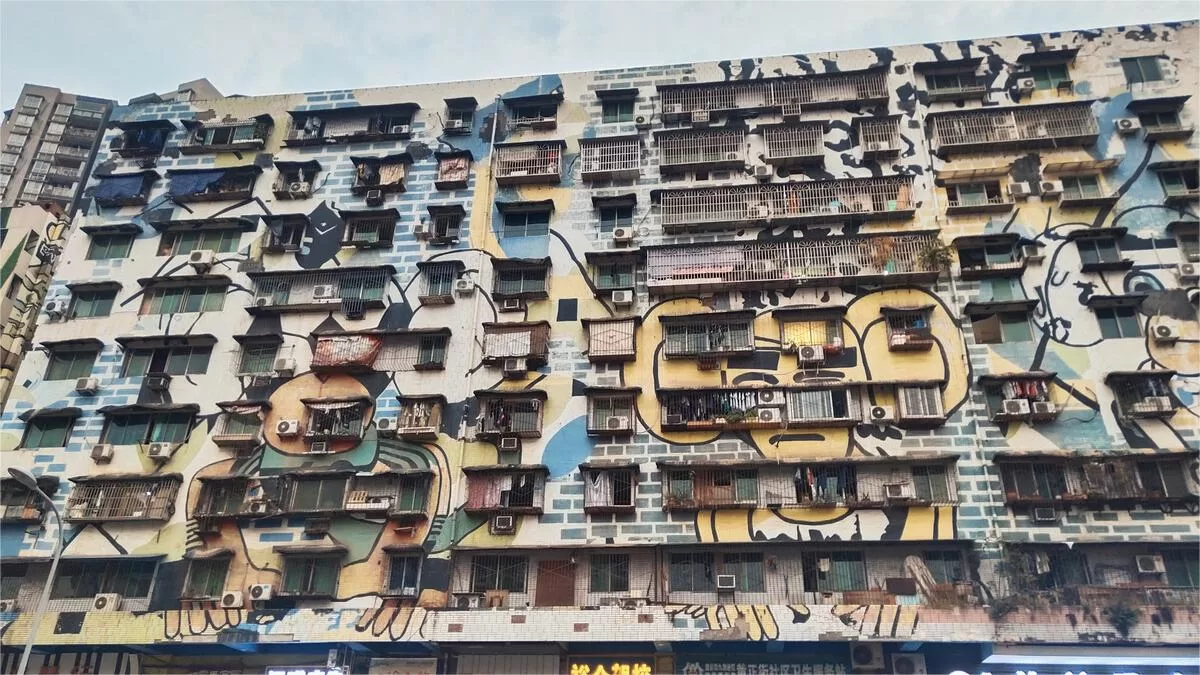
Nestled within the heart of China’s bustling metropolis, Chongqing, lies a hidden gem that has transformed the city’s landscape and captured the hearts of both locals and tourists alike. Stretching for a mesmerizing 1.25 kilometers, Chongqing’s Graffiti Street (重庆涂鸦街) stands as the largest graffiti masterpiece in not only China but also on a global scale. This vibrant tapestry of art and creativity, completed by an army of over 800 talented individuals, including students from the prestigious Sichuan Fine Arts Institute and seasoned artists, has redefined the visual identity of the area, injecting life and vitality into its once-shabby façade.
Table of Contents
- Basic Information
- Location and Transportation
- Highlights of Graffiti Street
- Vlog about Chongqing Graffiti Street
- Useful Tips Summarized from Reviews
- Attractions near Graffiti Street
Basic Information
| Estimated Length of Tour | About 1 hour |
| Ticket Price | Free |
| Opening Hours | 24 hours a day |
| Telephone Number | 0086-023-68501160 |
Location and Transportation
Nestled within the vibrant cityscape of Chongqing, the awe-inspiring Graffiti Street finds its home in the Jiulongpo district. Spanning a distance of 1.25 kilometers, this artistic wonderland embarks on its colorful journey at the doorstep of the Huangqueping Railway Hospital and weaves its way through the heart of the district, concluding its mesmerizing display at the 501 Arts Vault.
To get there, tourists can take bus 223, 233, 244, 441, 823, or 3265 and get off at Huangqueping Zheng Street Stop (黄埆坪正街站).
Highlights of Graffiti Street
Huge Project
The monumental endeavor that is Graffiti Street was no small feat. It required an astonishing 12,500 kilograms of paint, an arsenal of approximately 30,000 brushes, and a dedicated 150 days of relentless effort to bring this vision to fruition. The result is an awe-inspiring transformation of 37 previously unremarkable buildings, covering an astounding 50,000 square meters, into a living canvas that pulsates with creativity and color.

Dynamic Graffiti Art
At the heart of this urban revolution stands the bold and dynamic graffiti art, a testament to the boundless human imagination. Artists from diverse backgrounds and experiences have poured their souls into this project, infusing it with a kaleidoscope of themes and emotions. From vivid landscapes to intricate abstract designs, the walls of Graffiti Street speak a universal language that transcends barriers and resonates with all who pass by.
Collaboration of Artists
One of the most remarkable aspects of Graffiti Street is its ability to bridge the gap between the established art world and emerging talent. The inclusion of students from the Sichuan Fine Arts Institute provided an invaluable learning experience for young artists, allowing them to collaborate with seasoned professionals and hone their craft in an authentic setting. This fusion of fresh ideas and seasoned expertise breathed life into every brushstroke, creating a dynamic and evolving masterpiece that captivates visitors from all walks of life.

Cultural Renaissance
Beyond the aesthetic transformation, Graffiti Street has ignited a cultural renaissance in Chongqing. The once-neglected neighborhood now stands as a beacon of artistic expression, drawing visitors from all corners of the world to experience its vibrant energy. Tourism in the area has experienced a significant boost, with the street becoming a must-visit destination for both art enthusiasts and curious travelers looking to immerse themselves in a unique and immersive urban experience.
The impact of Graffiti Street extends far beyond its aesthetic allure. It has become a living testament to the power of art to revitalize communities and redefine urban spaces. The revitalization of these buildings has not only breathed new life into the neighborhood but also served as an inspiration for further community development projects in Chongqing and across China.

Lovely Statues
While the graffiti itself is the centerpiece of this artistic wonderland, Graffiti Street offers much more than meets the eye. In addition to the captivating wall art, the street is adorned with over 20 striking statues that further enrich the sensory experience of visitors. These statues, ranging from abstract sculptures to whimsical installations, complement the overall ambiance of the street and offer a deeper connection to the world of art.
Vlog about Chongqing Graffiti Street
Useful Tips Summarized from Reviews
Clothing Choice: When taking photos, it’s recommended to wear solid colors such as white or black that have strong saturation. Avoid overly flashy or busy patterns as they may clash with the graffiti background, making it harder to capture good photos.
Graffiti Art Supplies: You can purchase paint or graffiti supplies from small shops along the street if you’re interested in creating your own graffiti artwork. However, be sure to respect designated areas for graffiti and avoid painting on surfaces where it’s prohibited, including storefronts of businesses.
Be Mindful of Wet Paint: When taking photos, be mindful of freshly painted graffiti. Some visitors might have just finished painting, and the paint may still be wet. Check the nearby graffiti to ensure it’s dry before posing or leaning against it to avoid getting paint on your clothes.



In the afternoon, after visiting the museum at Sichuan Fine Arts Institute, we headed to take photos at Graffiti Street. There were so many people lining up to take pictures with the statue of Yiyang Qianxi.
In the evening, I arrived at Huangjueping Graffiti Street and saw the walls and streets covered in graffiti, as well as that popular internet-famous traffic teahouse. Unfortunately, it was already too late, and it was closed.
This was my first attempt at wall painting. With limited tools and only yellow and red paint available, I did my best to cover the entire wall with the materials I had. After three hours, with the help of my friends, I was satisfied with the final result.
Along the way, there are paint sales for 10 yuan for three colors, allowing you to do DIY projects. However, the walls are mostly already covered in paint, and there are some areas where painting is not allowed, so be sure to pay attention to that!
The graffiti street is perfect for taking photos! I suggest everyone buy their own paint to add their own touches, it’s really fun! Paint usually costs around 10 yuan per box, and it’s a good idea to get extra black paint to cover up others’ graffiti.
After exiting from Sichuan Fine Arts Institute metro station, it only takes a few minutes’ walk to reach the Graffiti Street.
This street is filled with fans expressing their admiration for celebrities, declarations of love for friends and partners.
There are many shops selling paints along that street, with a basic set of three colors priced at around 10 yuan, and also small bottles of paint (price not specified).
Nearby there is an art school, and wherever there is a place to paint on the street, graffiti can be seen everywhere, including on trees and even in restrooms. There are shops selling pigments, and many fans come here. Many walls are filled with drawings of celebrities, with several layers of paint repeatedly applied on the walls.
Not a place for celebrity chasing or selfies.
We finished exploring in just five minutes haha.
The alley is very unique,
but the cost-effectiveness of making a special trip for it is not high.
When you get off at Exit 4 of Sichuan Fine Arts Institute (四川美院) Metro Station and walk about 400 meters, you will come across a graffiti street. Once you enter a small alley, you will be surrounded by graffiti art. As you walk along, you will spot Traffic Tea House (交通茶馆). Continuing along the graffiti street, you will encounter a road where almost every wall is covered in graffiti. Nearby shops sell paint for 10 yuan a portion .
It’s better not to get off at the Huangju Ping Zhengjie Station, go one more stop to Huangju Ping Station. Huangju Ping Zhengjie is the central area of the Huangju Ping Graffiti Art Street. If you want to fully explore the art street, you should get off at Huangju Ping. This is not only the starting point of the graffiti art street, but also where the Sichuan Fine Arts Institute is located. Visitors can enter and explore it, with many… Read more »