
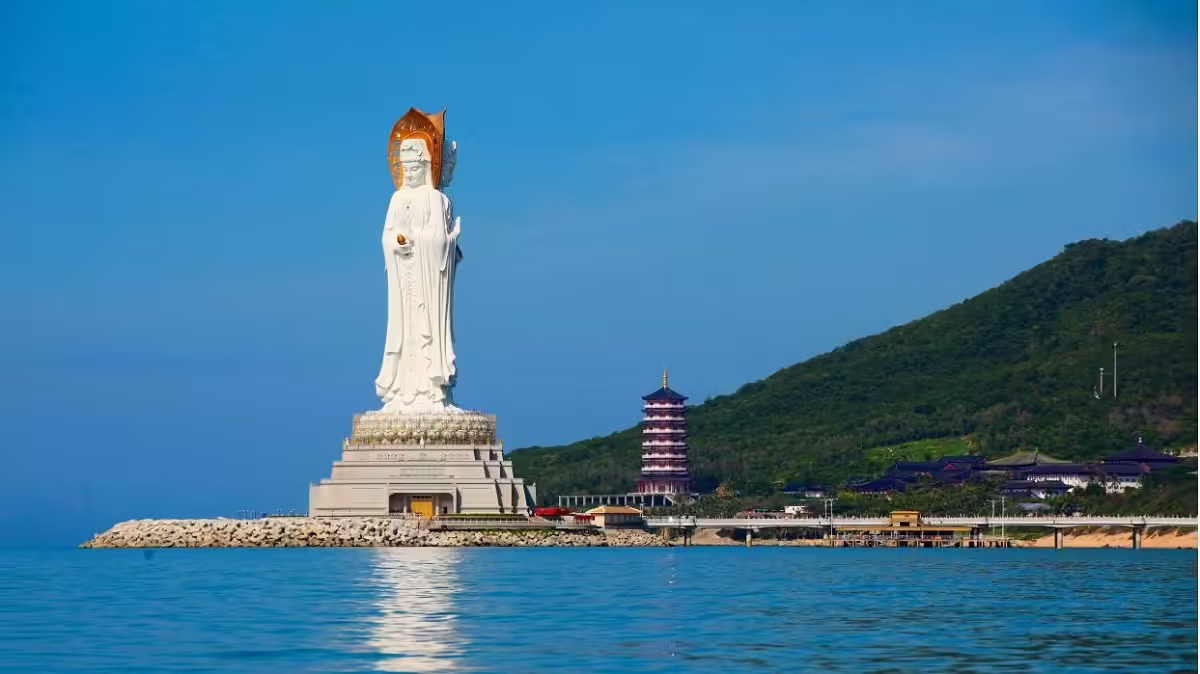
Nanshan Cultural Tourism Zone (南山文化旅游区) is located at the southernmost tip of China, characterized by a tropical maritime monsoon climate. It boasts excellent air and seawater quality, with a forest coverage rate of 97%. This large park showcases traditional Chinese Buddhist culture and is considered a place of good fortune and blessings.
According to Buddhist texts, Avalokitesvara Bodhisattva made twelve great vows to help all beings, with the second vow being to “always dwell in the South China Sea.” The renowned Tang dynasty monk Jianzhen attempted to spread Buddhism to Japan five times, ultimately ending up at Nanshan for a year and a half, where he built a temple and taught the Dharma before successfully making his sixth journey to Japan.
Nanshan is also significant in the cultural heritage of longevity and blessings, reflected in the famous saying, “May your fortune be as vast as the East Sea and your life be as long as Nanshan.” This underscores the deep historical connection between Nanshan and the culture of prosperity and longevity.
Table of Contents
Basic Information
| Estimated Length of Tour | 1 day |
| Ticket Price | 150 RMB (1st May – 30th September) 129 RMB (1st October – 31th April) |
| Opening Hours | 8.00 – 17.00 |
| Telephone Number | 0086-0898-88837888 0086-0898-88837985 |
Location and Transportation
Nanshan Cultural Tourism Zone is located in Nanshan Village, Yacheng District, Sanya, Hainan Province. To get there, you can choose one of the following ways:
- By Bus: You can take public buses numbered 5, 30, 55, 116, 125, or 157, which will take you to the Nanshan Scenic Area stop. From there, it’s just a short walk to the entrance.
- By Taxi: If you prefer a taxi, it takes approximately 40 minutes from downtown Sanya to Nanshan, with fares ranging from 60 to 80 yuan.
- Hotel Shuttle: If you are staying at the Nanshan Reception Hotel, you can enjoy free shuttle service between Sanya and Nanshan. The shuttle typically departs from Dadonghai at 10:00 AM and returns from the hotel to downtown Sanya at 3:00 PM. Be sure to reserve your spot in advance.
- Intra-Park Transportation: Once inside the Nanshan Cultural Tourism Zone, you can use the electric carts that connect various attractions for a fee of 30 yuan per person.
Highlights of Nanshan Cultural Tourism Zone
The Non-Duality Gate (不二法门)

In Buddhism, the term “Dharma” refers to the norms for understanding things, while “Gate” signifies the enlightened state achieved by saints. Among the 84,000 paths in Buddhism, the Non-Duality Gate represents the highest realm. Entering this gate allows one to enter the sacred domain of Buddhism, where one can directly perceive the holy path, ultimately transcending life and death to attain Nirvana. Philosophically, “non-duality” encompasses concepts such as “neither this nor that,” “equality of all beings,” “self and others being equal,” and “mind and Buddha being equal.” It reflects the method and ideas of Buddhist perception of the world and elucidates the relationship between the essence and appearance of all things. The Non-Duality Gate in the Nanshan scenic area showcases architectural styles from the Northern and Southern Dynasties. Passing through this gate leads visitors into the auspicious and serene Buddhist sanctum of Nanshan.
Golden and Jade Guanyin (金玉观音)

The world-renowned “Golden and Jade Guanyin” is enshrined in the magnificent “De Zai Zi Zai Guanyin Pavilion.” This statue of Avalokitesvara stands at 3.8 meters tall and is adorned with relics of Shakyamuni Buddha. It consists of the Guanyin body, a halo of light, a thousand-leaf lotus, and a base made of purple sandalwood, crafted from over 100 kilograms of gold, more than 120 carats of diamonds, and thousands of rubies, sapphires, emeralds, corals, turquoise, pearls, and over 100 kilograms of jade. The statue is a remarkable example of traditional Chinese craftsmanship, utilizing the “court gold craftsmanship” technique. Its total value is approximately 192 million RMB, making it a unique masterpiece that embodies both national style and contemporary spirit, as well as a rare gem in the history of contemporary arts and Buddhist sculpture. On November 27, 1998, the Golden and Jade Guanyin was recognized as the largest golden and jade Buddha statue in the world and was entered into the 1999 Guinness Book of Records.
Thirty-Three Guanyin Hall (三十三观音堂)

The Thirty-Three Guanyin Hall is home to the largest and most exquisitely crafted indoor assembly of Avalokitesvara statues in the world, recognized by the Guinness World Records. This impressive ensemble spans 50 meters in length and weighs 15 tons, created by over 130 artisans over four years. The statues are made using advanced lacquer materials and gilding techniques, showcasing vibrant, lifelike forms with intricate carvings. The hall draws inspiration from the beautiful legend of Avalokitesvara’s journey to spread Buddhist teachings across the South China Sea. According to the “Lotus Sutra,” Avalokitesvara has thirty-two manifestations, which further enrich the culture surrounding this revered figure. Each statue in the hall presents a unique posture, highlighting the diversity of Guanyin’s representations.
Long Wuye Caishen Hall (龙五爷财神殿)

Located in Sanya’s Nanshan, Long Wuye Caishen Hall is dedicated to Long Wuye, the fifth son of the South Sea Dragon King, regarded as the “Number One God of Wealth.” The hall consists of three main sections: the Hall of Wealth, which teaches visitors how to attract fortune; the Treasury, which protects and preserves wealth; and the Ten Thousand Buddha Pavilion, which bestows blessings of prosperity and fortune upon visitors. Within the Hall of Wealth, eight pillars symbolize the eight significant methods for seeking wealth as advised by Long Wuye. Following these teachings and establishing a correct understanding of wealth are essential for attracting good fortune.
Nanshan Temple (南山寺)

Nanshan Temple is located within the Nanshan Cultural Tourism Zone in Sanya and is designed in the style of the Tang Dynasty, sitting majestically between the mountains and the sea. The temple was chosen as a site by the late Zhao Puchu, former president of the Chinese Buddhist Association, and was approved by the National Religious Affairs Bureau. Groundbreaking took place on November 11, 1995, and the temple was completed on April 12, 1998.
The temple complex features a variety of structures, including the Righteous Kings Hall, Heavenly Kings Hall, Bell Tower, Wheel-Turning Pavilion, and two long corridors, covering a width of 188 meters and a length of 416 meters, with a total height difference of 49 meters across eight levels. The total area of the complex is approximately 40,000 square meters, making it the largest Buddhist temple constructed in China in nearly fifty years and the largest in southern China.
Sea Avalokitesvara (海上观音)

The statue of Avalokitesvara, known as Nanhai Guanyin, embodies one of her twelve great vows, specifically the desire to dwell in the South Sea. Nanshan, located on the shores of the South China Sea, resembles a giant turtle, historically referred to as Aoshān, symbolic of Avalokitesvara’s mount. The region has long been associated with legends of Avalokitesvara’s journeys across the sea to assist those in need.
In proximity to the temple lie the islands of Dongzhao and Xizhao, which, according to legend, were formed from the soil Avalokitesvara dropped while responding to the cries of the suffering. In 1993, the State Council’s Religious Affairs Bureau and the Hainan Provincial Government officially approved the construction of Nanshan Temple and the erecting of a 108-meter-high statue of Avalokitesvara in the sea in front of the temple. A grand consecration ceremony for the statue took place on April 24, 2005, coinciding with the birth anniversary of Ksitigarbha Bodhisattva.
