
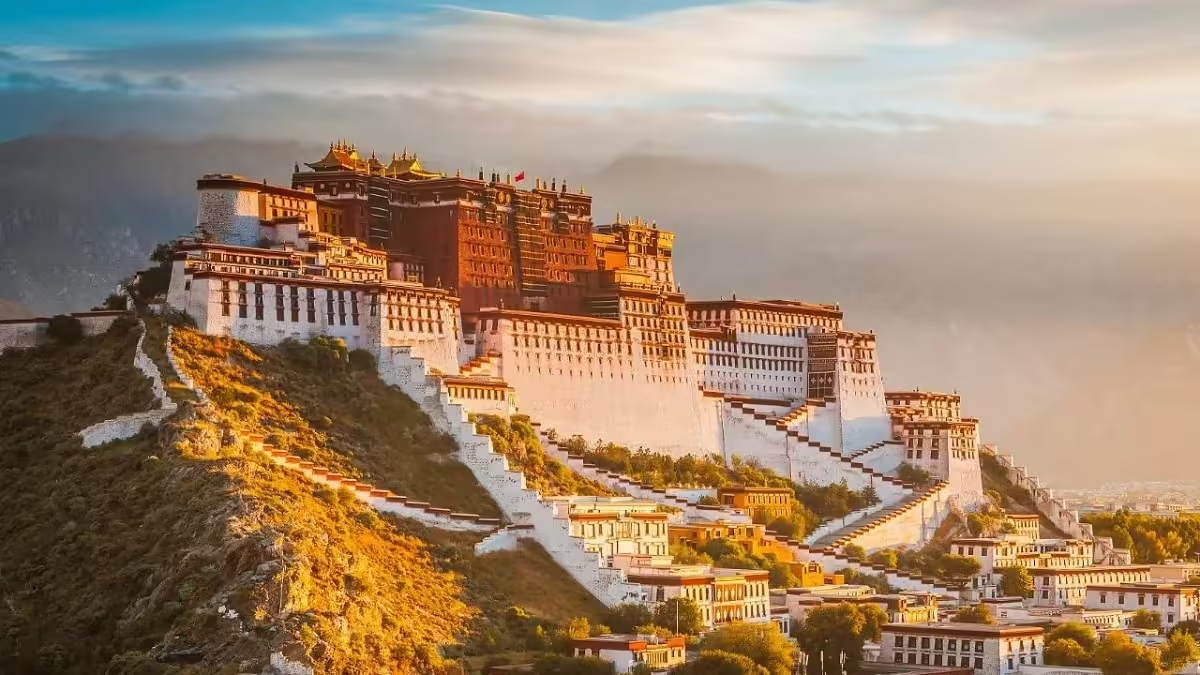
The Potala Palace (布达拉宫), located on Marpo Ri (Red Mountain) in Lhasa, is a stunning architectural masterpiece and a significant cultural symbol of Tibet. Originally constructed in 631 AD under King Songtsen Gampo, the palace was intended as a spiritual center, named after the Sanskrit term “Potala,” which refers to the abode of the Bodhisattva Avalokiteshvara.
After suffering extensive damage due to natural disasters and the decline of the Tibetan Empire, the palace was rebuilt in 1645 by the Fifth Dalai Lama, who aimed to strengthen the political and religious authority of the Gelug school of Tibetan Buddhism. Since then, the Potala Palace has undergone continuous expansions, resulting in its current grandeur and scale.
Covering over 360,000 square meters, the palace complex comprises more than 1,200 rooms, including residential quarters, religious halls, and administrative offices. The main structure rises 117 meters high and consists of two main sections: the White Palace and the Red Palace. The White Palace served as the residence of the Dalai Lamas and the center of government, while the Red Palace is primarily dedicated to religious activities and houses the stupa memorials of past Dalai Lamas.
The layout of the Potala Palace is designed in accordance with Buddhist cosmology, representing the body, speech, and mind of the Buddha. Its numerous statues, murals, and thangkas symbolize the teachings of Buddhism, while the stupas within reflect the spiritual essence of the Buddha. With its exquisite art and rich historical significance, the Potala Palace stands as a treasure trove of Tibetan Buddhist culture and an enduring symbol of Lhasa and Tibet.
Table of Contents
- Basic Information
- Location and Transportation
- Highlights of Potala Palace
- Notable Figures Related to Potala Palaces
- History of Potala Palace
Basic Information
| Estimated Length of Tour | Half a day |
| Ticket Price | 1st May – 31st October Route 1: 200 RMB Route 2: 100 RMB 1st November – 30th April Route 1: 100 RMB Route 2: 50 RMB |
| Opening Hours | 9.30 – 17.00; Last admission: 15.10 9.00 – 17.30: Last admission: 15.40 |
| Telephone Number | 0086-0891-6339615 0086-0891-6339615 |
Note for Visiting Potala Palace:
- Advance Reservation: Visitors must book their tickets through the “Potala Palace Ticket Booking System” or the official WeChat account within ten days before their visit. On the day of the visit, guests should arrive at the main entrance security check at least one hour early to avoid delays.
- Special Arrangements for Seniors: Elderly individuals aged 60 and over who face difficulties with smart technology should make reservations in person at the “Potala Palace Ticket Booking Office” one day in advance. Tickets are available starting at 9:00 AM, but quantities are limited and distributed on a first-come, first-served basis.
- Visitor Capacity: If daily visitors on Route 1 exceed 5,000, Route 2 will be activated, which can accommodate up to 2,000 visitors.
Location and Transportation
The Potala Palace is located at 35 Beijing Middle Road, Chengguan District, Lhasa, Tibet Autonomous Region, China. Perched on Marpo Ri Hill, it offers stunning views of the surrounding city and mountains, making it a prominent landmark in Lhasa.
To get there, you can take bus 2, 6, 8, 0, 10, 13, 14, 17, 24, 26, 34, K01, L2, or W03 and get off at White Pagoda Stop (白塔站, Baita).
Highlights of Potala Palace
The White Palace
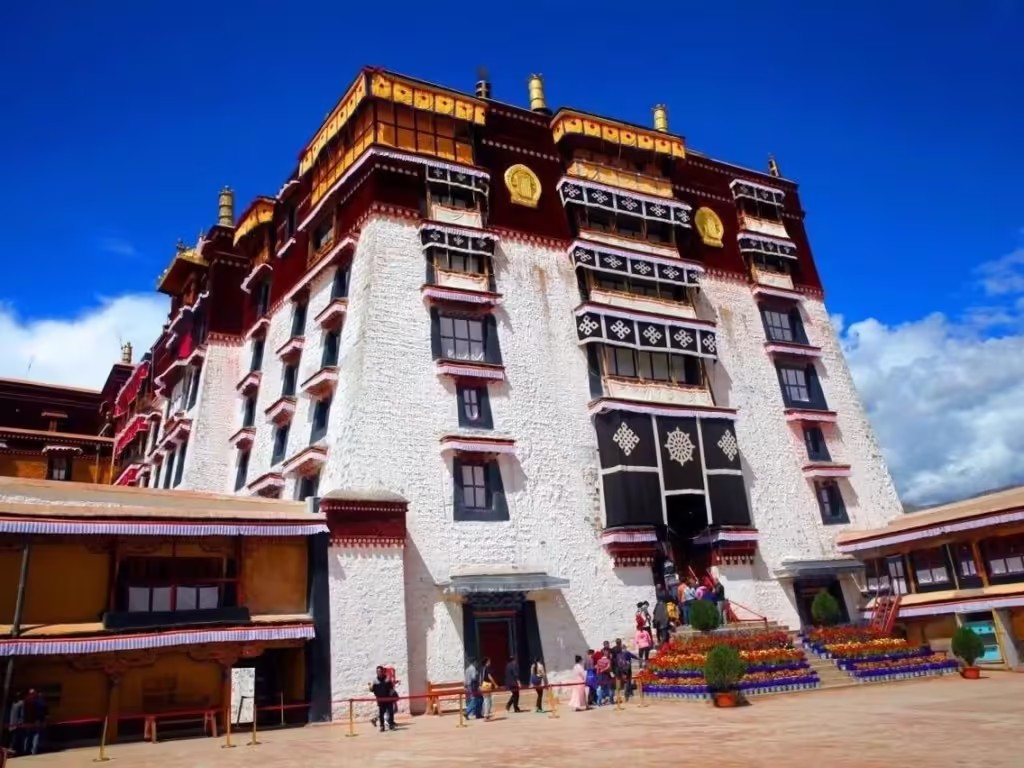
The White Palace serves as the winter residence of the Dalai Lama and was once the administrative center of the former Tibetan local government. Standing at seven stories tall, it is a significant part of the Potala Palace complex.
At the heart of the White Palace, on the fourth floor, lies the East Chapel of Complete Perfection (Cuoqing Xiasixipingcuo), which is the largest hall in the White Palace, covering an area of 717 square meters. This sacred space hosts important religious and political events, including the Dalai Lama’s enthronement and significant ceremonies. The fifth and sixth floors house the offices and living quarters for the regents.
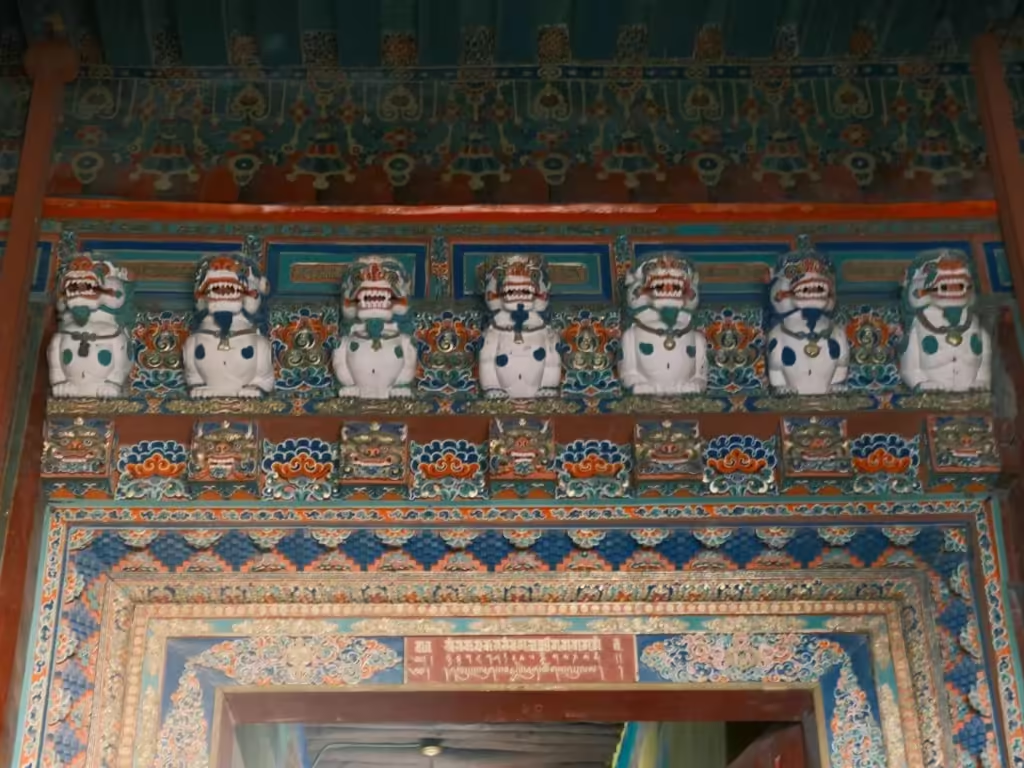
The topmost seventh floor features two winter residences for the Dalai Lama, known as the East and West Sunlight Halls, due to their ample sunlight exposure. The East Sunlight Hall was expanded during the later years of the 13th Dalai Lama and includes several luxurious rooms, such as the Palace of Joyful Radiance, the Palace of Eternal Blessings, the Protectors’ Hall, the Longevity Palace, and the Dalai Lama’s bedroom. The furnishings here are exquisitely crafted, with the Dalai Lama’s sleeping quarters adorned with a golden teapot and exquisite silk bedding.
The West Sunlight Hall, an earlier structure, also functions as a living space for the Dalai Lama. It comprises the Palace of Wonderful Rotation, the Palace of Abundant Blessings, the Palace of Joyful Heights, the bedroom, and the Protectors’ Hall.
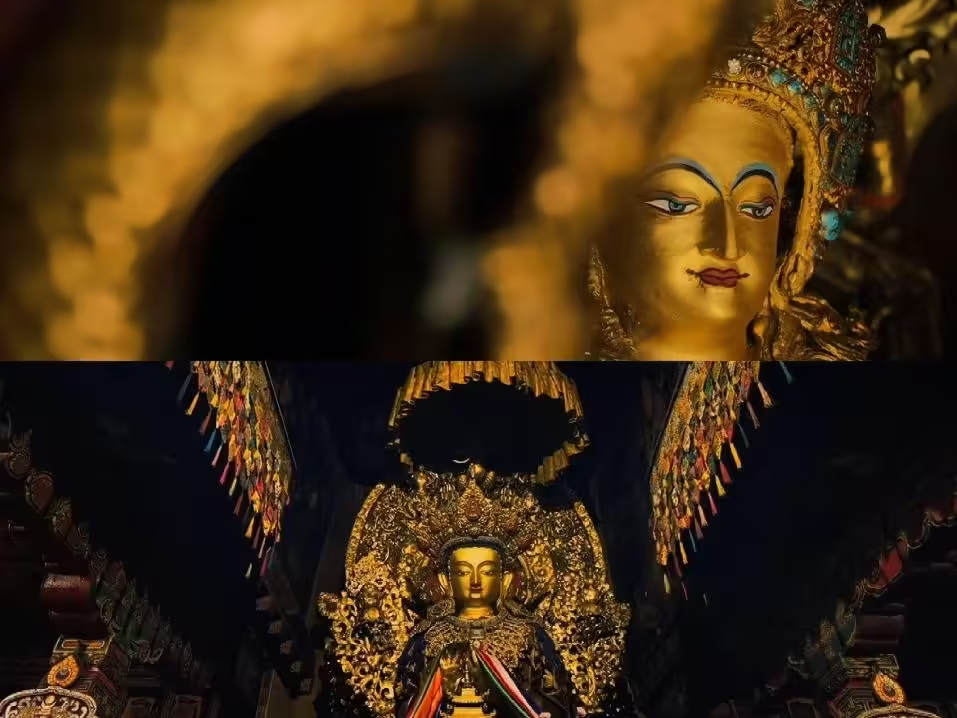
Entering the White Palace, visitors are greeted by a grand entrance hall adorned with murals. Notably, the northern wall features a depiction of Princess Wencheng’s journey to Tibet, while the southern wall showcases a proclamation from the fifth Dalai Lama appointing Sangye Gyatso as the regent, alongside a glass-encased handprint of the fifth Dalai Lama—both invaluable cultural artifacts.
In front of the White Palace is the East Courtyard (Deyangxia), a vast platform of over 1,500 square meters. Historically, this space was used by the Dalai Lamas to enjoy performances, particularly during festive occasions when religious dances and songs were held. The main building of the White Palace lies to the west of the courtyard, while the east houses the monk school, with residential quarters on either side.
The Red Palace
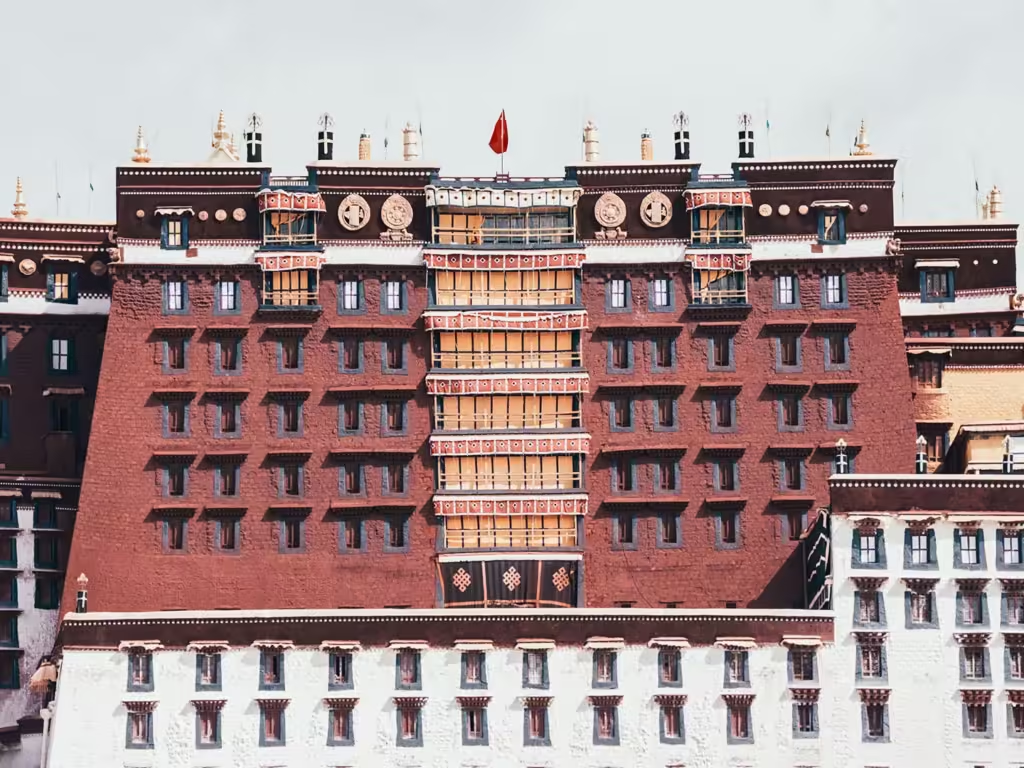
The Red Palace, characterized by its nearly square layout, stands at nine stories high. The lower four levels are built on a sturdy platform, while the central fifth level houses the West Chapel (Sri-zhi-pun-tshogs). Above this chapel, the upper four levels form a skylight, with the surrounding structures including stupa halls and Buddhist halls arranged around it.
The West Chapel, known as the Chapel of Complete Perfection (Cuoqing Nuxi Pingcuo), is the largest hall in the Potala Palace, covering 725 square meters. Significant Buddhist ceremonies are often held here. At the western end, the Dalai Lama’s throne is positioned beneath a plaque inscribed with “Emerging Lotus” by Emperor Qianlong of the Qing dynasty. The walls and the corridor around the courtyard are adorned with murals depicting the life and achievements of the fifth Dalai Lama, spanning 280 square meters. Among these, the mural of the fifth Dalai Lama’s visit to Emperor Shunzhi is considered a priceless work of art and historical documentation. The hall also retains a grand silk canopy presented to the Dalai Lama by Emperor Kangxi.
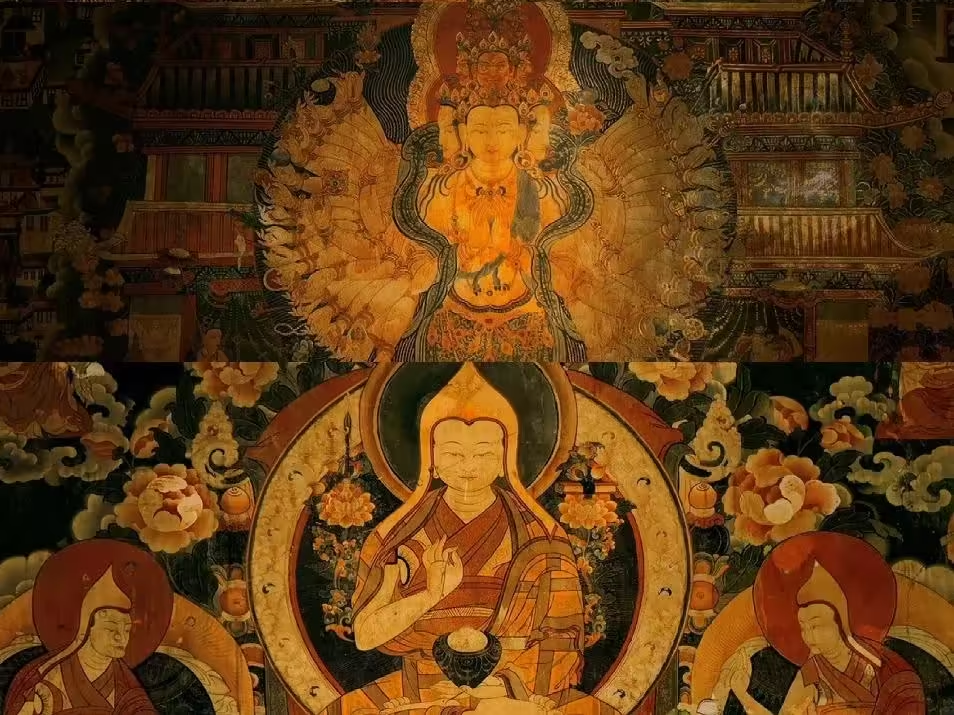
The Hall of Exceptional Realms (Sasong Langjie) is the highest hall in the Red Palace. Inside, it houses a plaque inscribed with “Long Live the Current Emperor” in Tibetan, Chinese, Manchu, and Mongolian, along with a portrait of Emperor Qianlong. Statues of figures like Vajrapani and Tsongkhapa are also found here. The eleven-faced Guanyin statue, created with a vast amount of silver by the 13th Dalai Lama, is another significant relic, marking this hall as a central site for major ceremonies.
The second corridor of the Red Palace is often referred to as the “Painted Corridor.” It is decorated with murals depicting the construction history of the Potala Palace, the completion celebration of the Red Palace, and various Buddhist rituals, totaling 698 pieces. These murals also showcase scenes from the daily lives of the Tibetan people during the palace’s construction, illustrating customs such as horse racing, archery, and wrestling.
Ancillary Structures
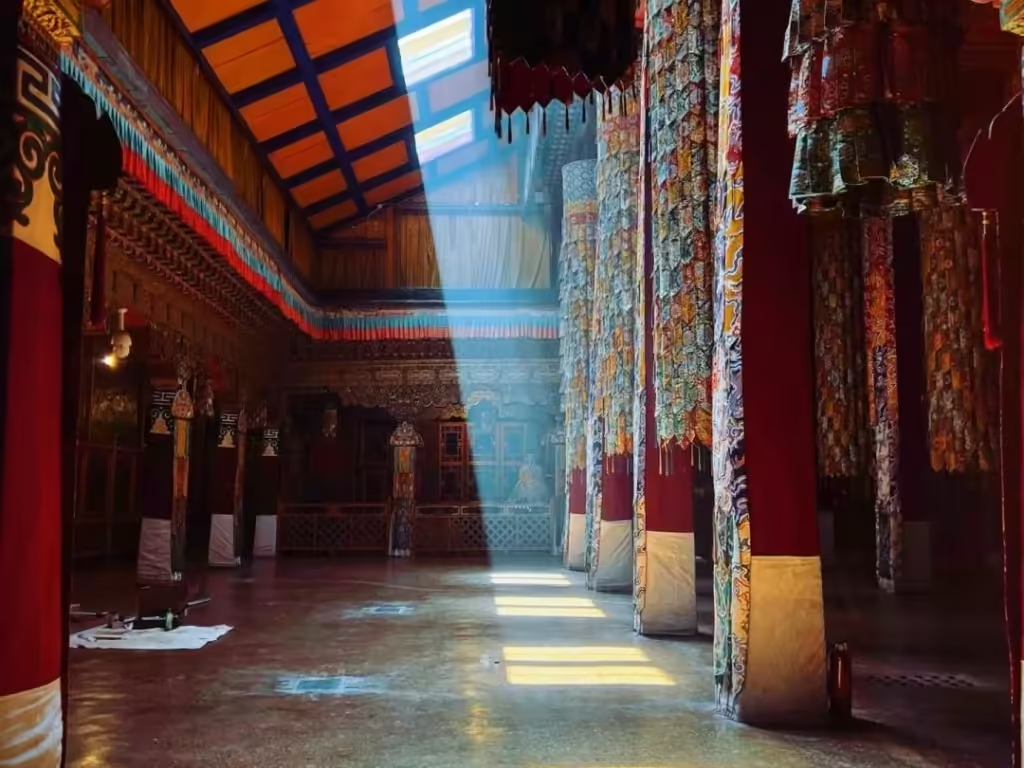
The Hereditary Hall: The Hereditary Hall is the first major hall encountered upon entering the Potala Palace from the rear mountain. It primarily houses a golden statue of Shakyamuni Buddha and a silver statue of the fifth Dalai Lama. To the east (right side), there are statues of the first to fourth Dalai Lamas, while the west side features statues of the Eight Medicine Buddhas and the Three Buddhas, totaling over 30 figures. The adjacent west wall displays the seated statue of the eleventh Dalai Lama, Kewji Gya Cho, along with his stupa. On the eastern and northern walls, shelves hold the Tibetan Buddhist scripture “Danju’er.”
Stupa Hall of the Fifth Dalai Lama: The stupa of the fifth Dalai Lama is one of the most significant stupas in Tibet, constructed with over 300 kilograms of gold. It is said to contain numerous treasures, including a finger bone of Shakyamuni, a bowl used by Tsongkhapa, and precious gems from an elephant’s brain. To the right of the hall is the stupa of the tenth Dalai Lama, while the left side features the stupa of the twelfth Dalai Lama, along with eight silver stupas adorned with various jewels.
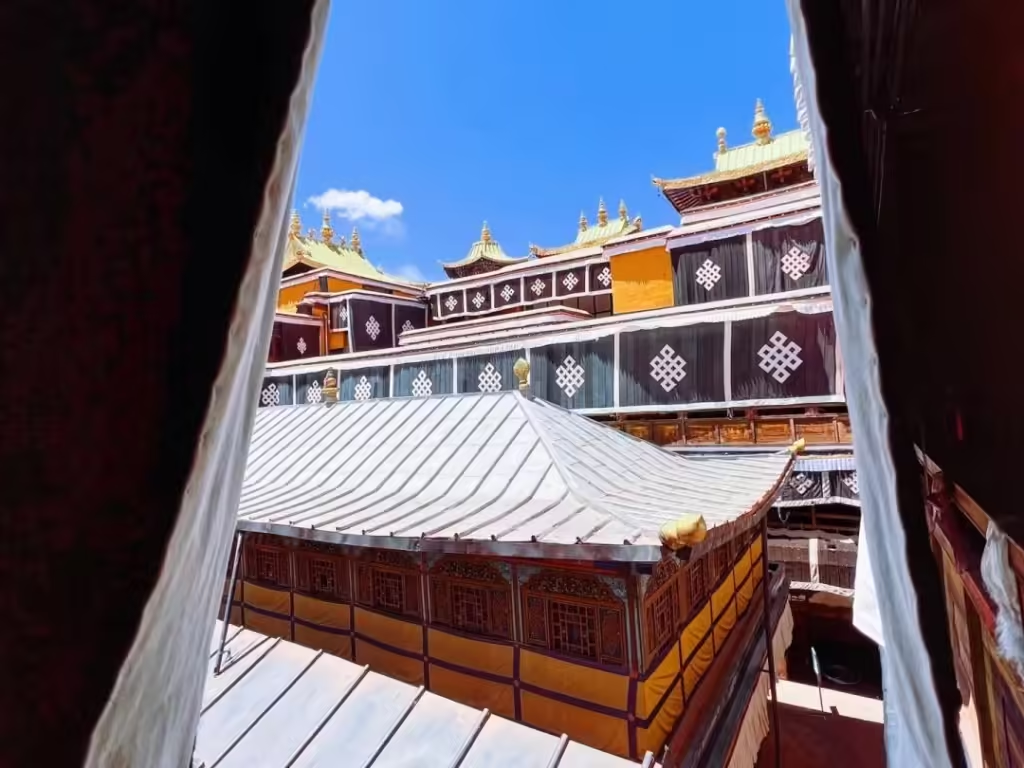
Chapel of the Mantras: The Chapel of the Mantras is dedicated to Padmasambhava, the founder of the Nyingma school of Tibetan Buddhism, featuring a silver statue of him. The eastern side displays eight statues of Padmasambhava’s lineage masters, while the western side showcases eight representations of his various manifestations. The hall also contains eight silver stupas, and shelves hold meticulously carved scriptures known as the “Kanjur,” created during the time of the fifth Dalai Lama.
Bodhi Path Hall: The Bodhi Path Hall is dedicated to the teachings of the Gelug school of Tibetan Buddhism, featuring a central statue of Tsongkhapa, the school’s founder. The hall also houses bronze statues of prominent figures from both the Gelug and Kadam schools, embodying their rich spiritual heritage.
Sounding Bronze Hall: The Sounding Bronze Hall contains over 3,000 bronze statues, including representations of Shakyamuni and Amitabha Buddhas. Among these, there are numerous statues crafted during the Ming Dynasty, particularly from the Xuande and Yongle eras, highlighting the exquisite artistry of that time.
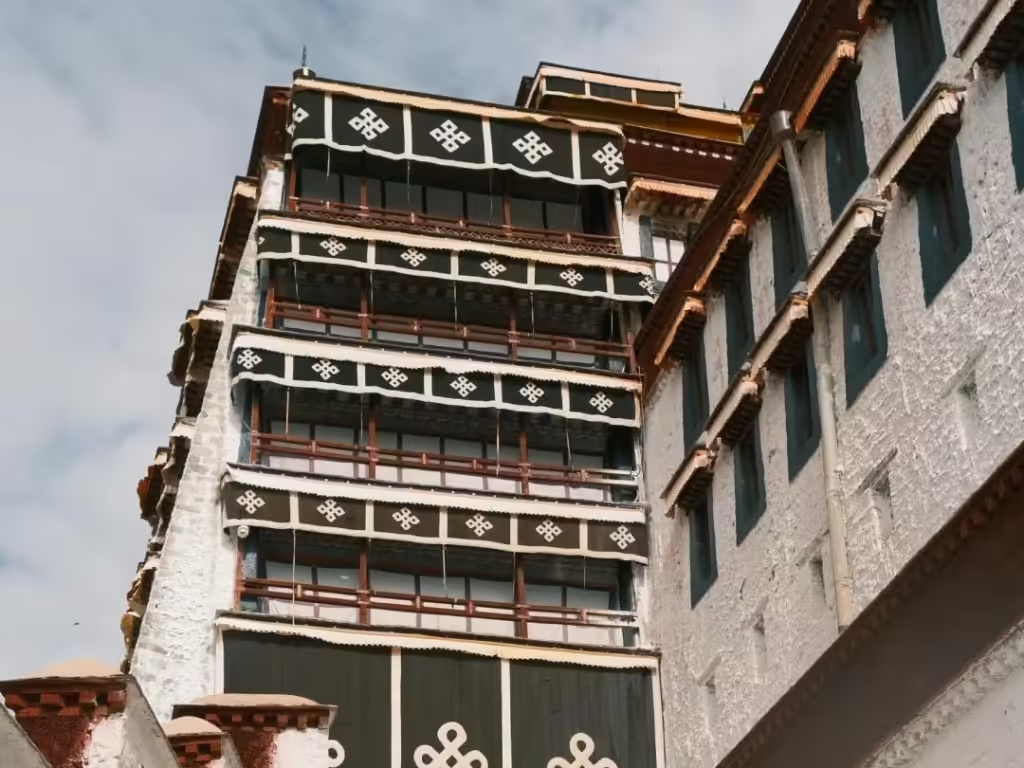
Samantabhadra’s Pavilion: In the center of the Samantabhadra’s Pavilion sits a gilded bronze statue of Shakyamuni Buddha, flanked by statues of Avalokiteshvara and the fifth Dalai Lama.
King’s Cave: The King’s Cave dates back to the 7th century, during the Tubo dynasty. It is venerated by Tibetan Buddhists as the place where King Songtsen Gampo, known as the “Dharma King,” practiced meditation. The cave houses valuable statues from the early construction of the Potala Palace, including figures of Songtsen Gampo, Princess Wencheng, Princess Chizun, and Gar Danzang, who is believed to be the founder of the Tibetan script.
Amitayus Buddha Hall: The Amitayus Buddha Hall features a central platform housing nine statues of Amitayus Buddha, along with one statue each of White Tara and Green Tara. The walls of the hall are adorned with intricate murals that enhance its serene atmosphere.
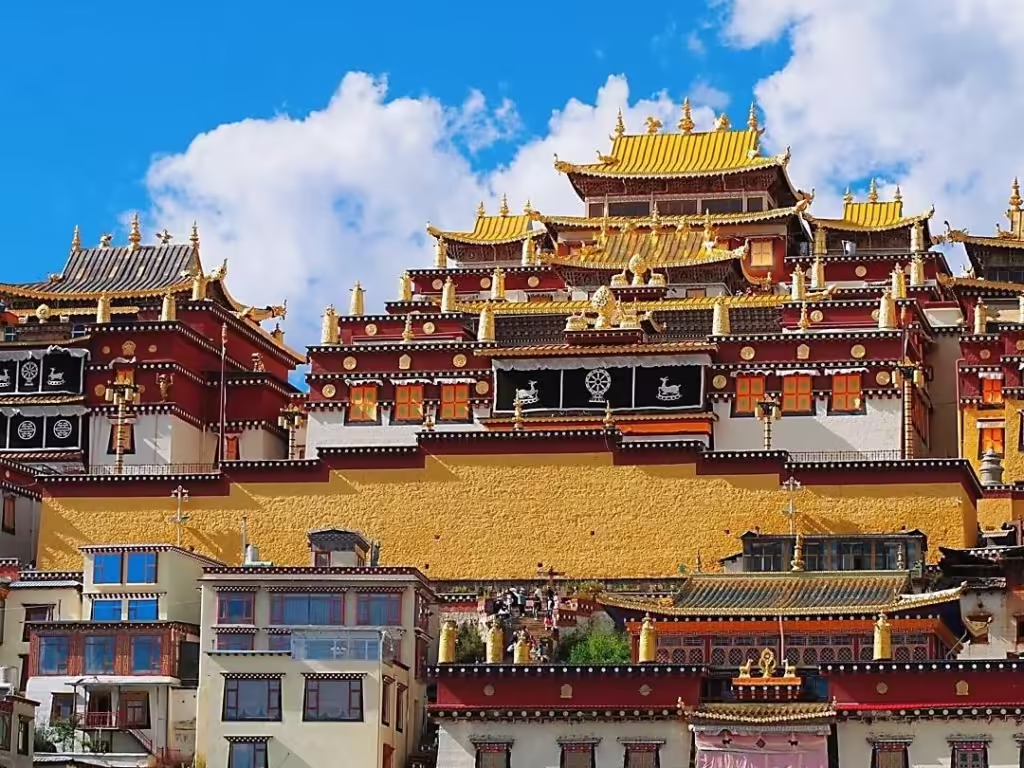
Shakyamuni Hall: The Shakyamuni Hall is dedicated to the historical Buddha, Shakyamuni, and prominently displays his statue at the center. Flanking him are statues of his eight great disciples, representing the foundational figures of Buddhism. Within this hall, you can also find the throne of the seventh Dalai Lama and handwritten copies of the “Kangyur,” the Tibetan Buddhist canon, highlighting the connection between the teachings and their custodians.
Kalachakra Mandala Hall: At the heart of the Kalachakra Mandala Hall stands a gilded copper statue of the Kalachakra, an intricate mandala representing the cosmic principles of time and space. The term “Kalachakra” translates to “Wheel of Time.” In Tibetan Buddhism, this mandala is considered a sacred space for the practice of tantric rituals. It is believed that through these practices, one can access the mythical kingdom of Shambhala, which symbolizes spiritual enlightenment. The hall’s walls are decorated with over a hundred depictions of the Kalachakra deity and various astronomers, emphasizing the interconnectedness of Buddhist teachings and the natural world.
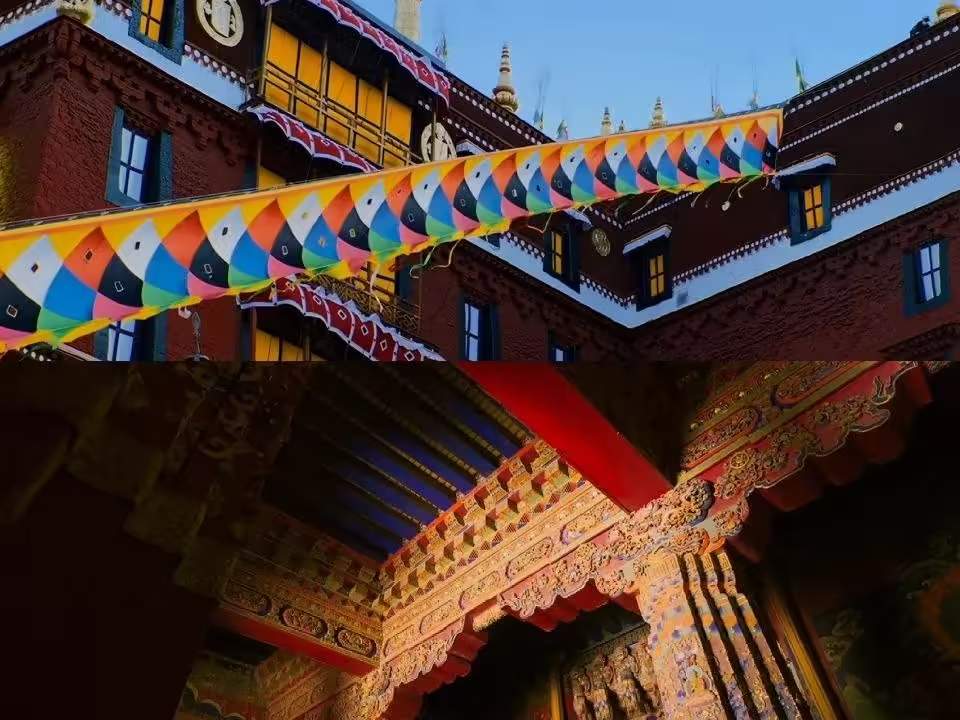
Ninth Dalai Lama Stupa Hall: The Ninth Dalai Lama Stupa Hall houses the stupa of the Ninth Dalai Lama, along with statues of the Ninth Dalai Lama, Lungtok Gyatso, and the great Tibetan scholar Tsongkhapa. This hall serves as a significant site for memorializing the contributions of the Ninth Dalai Lama to Tibetan Buddhism and reflects the deep reverence held for these spiritual leaders.
Eighth Dalai Lama Stupa Hall: The Eighth Dalai Lama Stupa Hall is primarily dedicated to the statue of the Eighth Dalai Lama, Jampel Gyatso, and his stupa. In front of the stupa, you will find offerings of auspicious symbols, including the Eight Auspicious Objects and the Seven Treasures of Sovereignty.
Hall of the Holy Avalokiteshvara: Above the entrance to the Hall of the Holy Avalokiteshvara hangs a plaque inscribed by the Qing Emperor Tongzhi, reading “Fortunate Field of Marvelous Fruits.” At the center of the hall stands a rare statue of Avalokiteshvara, carved from sandalwood, which is considered a priceless treasure of the Potala Palace. According to legend, this statue naturally formed and miraculously traveled from India to Lhasa. Avalokiteshvara is revered in Tibetan culture as the protector of Tibet, making this statue of special significance. The hall also contains several other precious Buddhist images and stupas, including a six-faced statue of Yama, enhancing its spiritual atmosphere.
Seventh Dalai Lama Stupa Hall: The Seventh Dalai Lama Stupa Hall features the stupa of the Seventh Dalai Lama at its center. Inside, there is also a statue of the Seventh Dalai Lama, Gecsang Zhab, along with altars and scripture shelves.
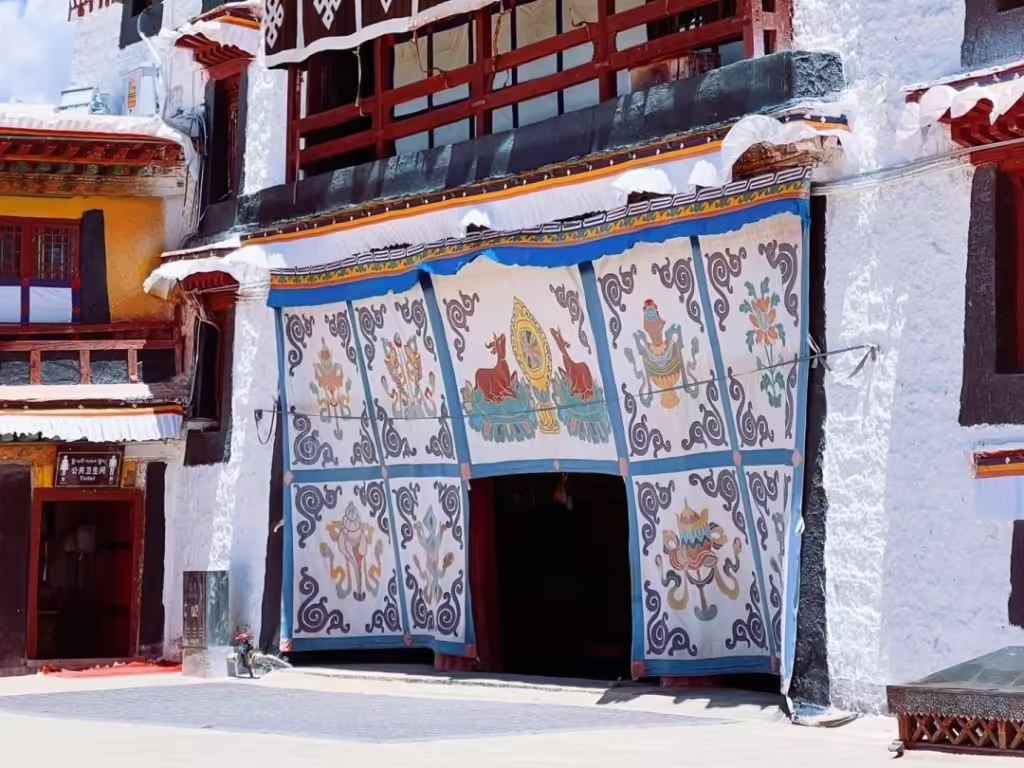
Guru Hall: The Guru Hall is dedicated to a statue of Tsongkhapa, the founder of the Gelug school, flanked by statues of the Sixth to Twelfth Dalai Lamas. Additionally, it houses statues of other renowned Tibetan masters. The altars contain thousands of statues of Tibetan kings and wise figures from the Tubo dynasty, along with numerous stupas.
Thirteenth Dalai Lama Stupa Hall: The Thirteenth Dalai Lama Stupa Hall is the most recent construction within the Potala Palace, begun in 1933 and completed three years later. The stupa of the Thirteenth Dalai Lama stands at 12.97 meters tall, covered in high-quality gold and adorned with thousands of jewels. The hall is filled with various ritual implements and a pearl stupa (mandala) created for offerings. The walls of the third floor are decorated with murals depicting the life and achievements of the Thirteenth Dalai Lama. This hall is not frequently open to the public, making it a special site of reverence and history.
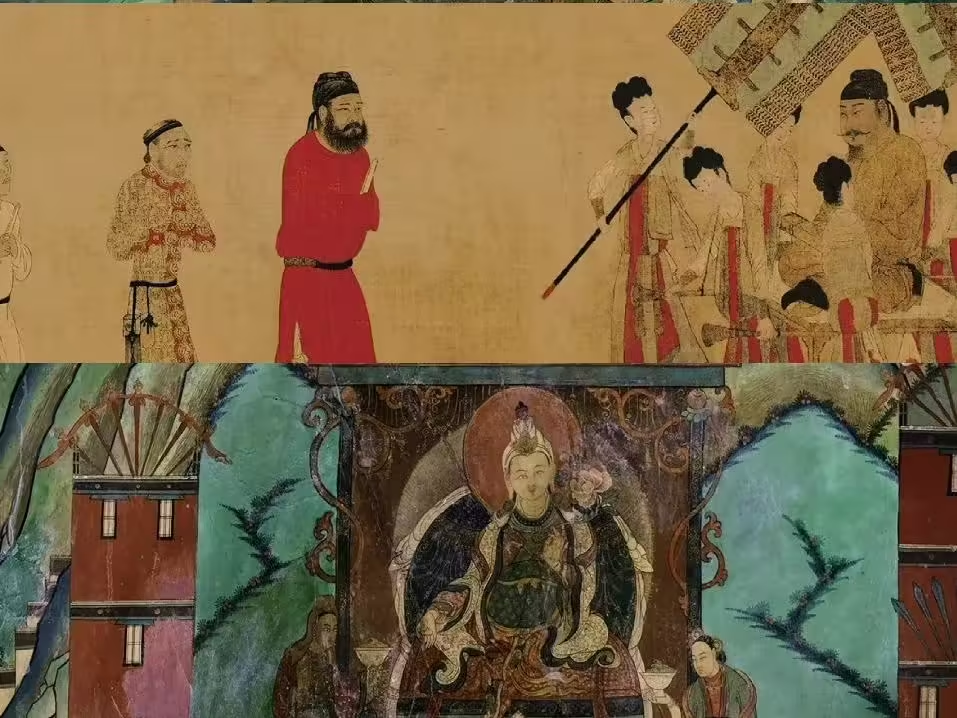
Longevity and Joy Hall: The Longevity and Joy Hall features the throne of the Sixth Dalai Lama, Tsangyang Gyatso. Along the walls are altars housing thousands of statues of Amitayus (Buddha of Infinite Life). The hall also contains over 2,000 statues, including the protective deity Aigezedi and Tsongkhapa.
Mandala Hall: The Mandala Hall centers around the Sangwang Dupa Mandala, with the Deque Mandala to the east and the Jigje Mandala to the west. These represent key deities in Vajrayana Buddhism. The walls of the hall are adorned with murals depicting notable Buddhist figures and the history of the teachings, adding to the hall’s spiritual ambiance.
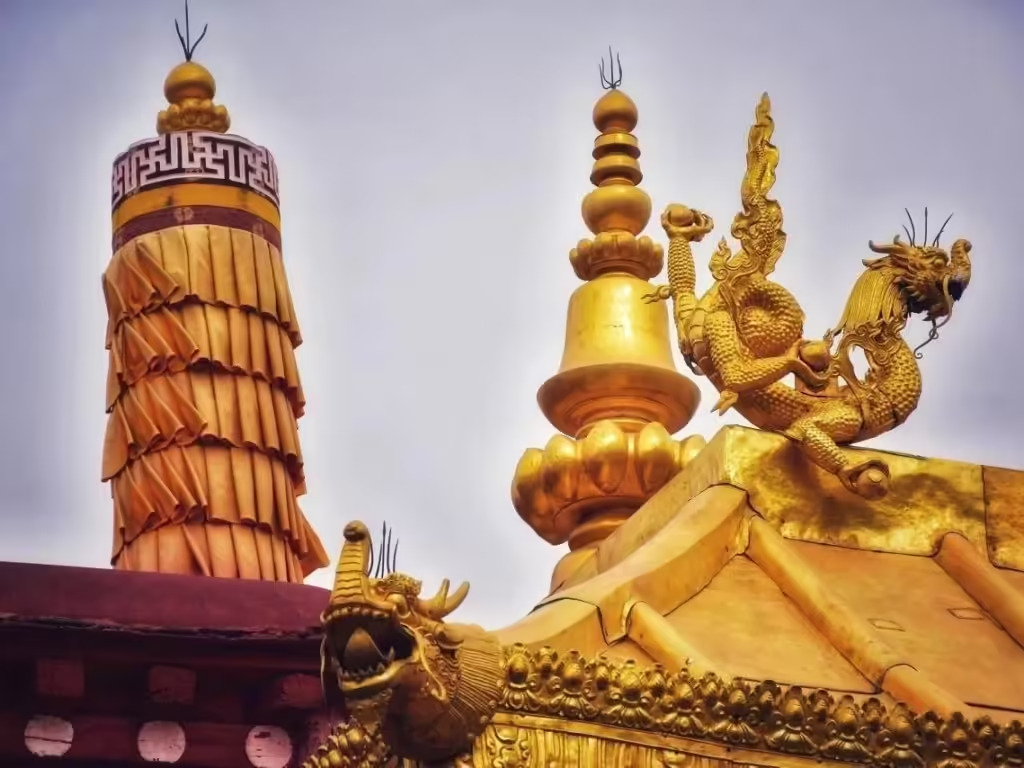
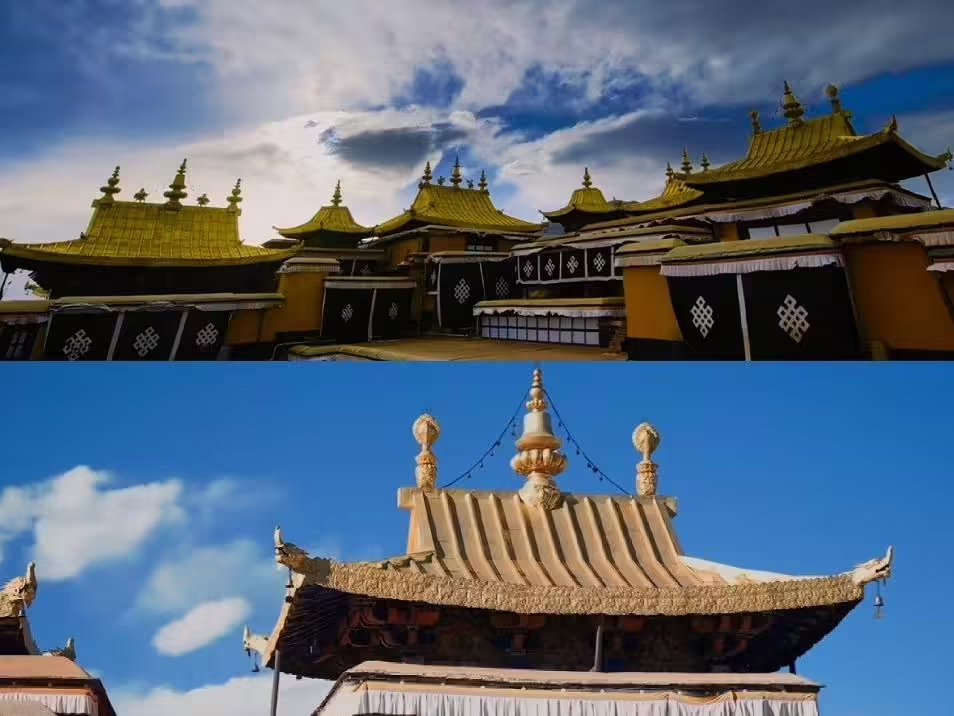
Golden Roof Area: The Golden Roof Area is located at the highest point of the Potala Palace. It comprises the gilded roofs of the Stupa Hall and the main Buddha hall, totaling seven structures. The roofs are lavishly decorated with golden embellishments. Surrounding the area are various prayer pillars and flags, enhancing its sacred atmosphere.
Maitreya Buddha Hall: The Maitreya Buddha Hall primarily houses a statue of Maitreya Buddha (the Future Buddha), flanked by three statues representing longevity and the goddess Dondrub Dolma. The hall also features additional statues and stupas, with the throne of the Eighth Dalai Lama situated on the west side.
Cultural Relics
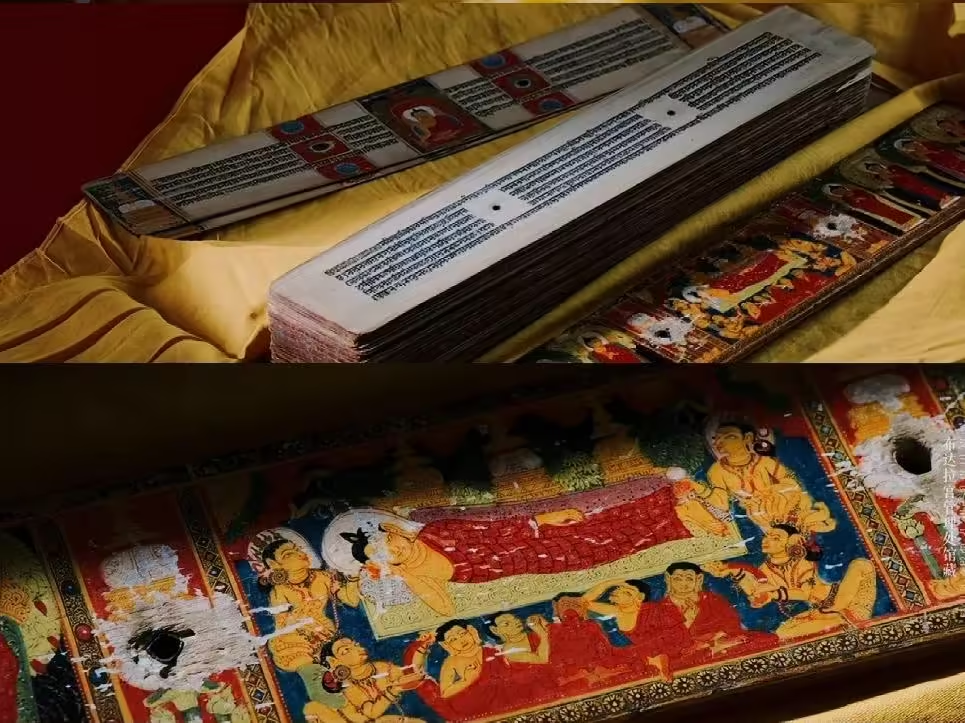
For over 300 years, the Potala Palace has collected and preserved an extraordinary array of historical artifacts. Its collection includes more than 2,500 square meters of murals, nearly 1,000 stupas, and over 10,000 statues, along with more than 10,000 thangkas (scroll paintings), totaling around 70,000 registered items. Notable treasures include eight golden stupas and five three-dimensional mandalas. The palace also houses precious texts, with over 60,000 volumes of scriptures such as the Bamboo Manuscripts and the Kanjur.
Additionally, the collection reflects the historical relationship between the Tibetan local government and the central government, featuring golden tablets and seals granted to the Dalai Lamas by emperors of the Ming and Qing dynasties, along with a wealth of gold and silver items, ceramics, enamelware, jade artifacts, brocade textiles, and exquisite crafts. These relics showcase a vibrant array of themes and artistry.
Notable Figures Related to Potala Palaces
Songtsen Gampo
Songtsen Gampo (617–650), a renowned Tibetan national hero, was the 32nd king of the Tibetan Empire during the Tang dynasty. He ascended the throne at the age of 13 and unified various Tibetan tribes over three years, relocating the capital to Lhasa and establishing a centralized slave system. In 641, he sent envoys to Chang’an to propose marriage to Princess Wencheng of the Tang dynasty, who arrived the following year. His reign saw significant advancements, including the creation of the Tibetan script, the establishment of laws and administrative systems, and the promotion of cultural exchanges between Tibet and China. His achievements earned him deep respect among the Tibetan people.
Princess Wencheng
Princess Wencheng (d. 680) was a member of the Tang royal family. In 640, she was sent to Tibet as a bride for Songtsen Gampo, bringing along various gifts and resources. Upon her arrival, she helped construct the Jokhang Temple and contributed to the cultural and technological exchange between the Tang dynasty and Tibet. Wencheng was known for her intelligence, education, and strong Buddhist faith, fostering brotherly ties between the Han and Tibetan people. Her contributions are celebrated in Tibetan culture, and her statue can be found in the Jokhang Temple.
Awang Lobsang Gyatso
Awang Lobsang Gyatso, the Fifth Dalai Lama, played a significant role in consolidating Tibetan power during the late Ming dynasty. He collaborated with the Fourth Panchen Lama to overthrow the ruling power of the Kagyupa sect and the local landowners. In 1652, he traveled to Beijing and was recognized by the Qing Emperor Shunzhi as a significant religious leader, receiving gold seals and titles. His leadership marked a pivotal moment in Tibetan history, further establishing the influence of Tibetan Buddhism and governance.
History of Potala Palace
Tang Dynasty Context
During the Tang dynasty, the development of the Chinese nation reached a new level, with a vast territory and a comprehensive governance system. The Tang dynasty was notable for its inclusiveness, uniting various ethnic groups such as the Xianbei, Turks, Huabei, Tibetans, and others, thereby consolidating the multi-ethnic state of China. It was in this context that the Potala Palace was established.
Before the 17th Century
Originally named Red Mountain Palace, the Potala Palace was constructed in 631 AD during the rise of the Tibetan Empire, under the direction of King Songtsen Gampo. It served as the political center of the unified Tibetan state, with significant administrative functions. Historical records describe the palace as grand, featuring three outer walls and thousands of rooms. A bridge of silver and copper connected the palaces of Songtsen Gampo and Princess Wencheng, and there was a horse-racing ground outside the east gate. However, after the disintegration of the Tibetan Empire in the 9th century due to wars and natural disasters, the palace fell into disrepair and was eventually abandoned.
During the Yuan and Ming dynasties, various local powers occupied the Potala Palace, which saw a decline in significance. By the early Qing dynasty, only a few structures, like the Buddha’s practice cave and the Holy Guanyin Hall, remained.
17th Century to Pre-PRC
In 1645, with the support of the Qing central government and possibly the Mongolian King Gushri Khan, the Fifth Dalai Lama initiated the reconstruction of the Potala Palace, particularly the “White Palace.” By 1648, the main structure was completed, and the administrative functions were moved from Drepung Monastery to the Potala. Following the Fifth Dalai Lama’s death in 1682, his regent kept the news secret for 13 years to ensure continuity in governance. In 1690, a stupa was built for the Fifth Dalai Lama, leading to the expansion of the “Red Palace.” The renovation was completed in 1693, marked by an uninscribed commemorative stele. Successive Dalai Lamas continued to add to the palace, including five golden roofs and auxiliary structures.
The Qing emperors provided support for repairs and expansions, especially during the campaigns against the Gurkha invasions of Tibet, with Emperor Qianlong frequently consulting with the Eighth Dalai Lama on restoration efforts.
People’s Republic of China Era
After 1959, the Potala Palace was repurposed solely for religious functions. The Chinese government prioritized its preservation and repair, allocating annual funds. In 1988, the State Council approved 55 million yuan and significant precious materials for the first phase of restoration, which commenced in 1989 and was completed in August 1994, thanks to the cooperation of Tibetan and Han engineers.
