

White Cloud Temple, or Baiyun Guan (白云观) in Chinese, stands as a prominent Taoist temple in Beijing and serves as the ancestral temple of the Quanzhen School of Taoism. Originally established during the Tang Dynasty, the temple boasts a rich history, reaching its zenith during the Yuan Dynasty when Master Qiu Chuji, also known as Changchun Zhenren, practiced and presided over Taoism here.
While the temple underwent various name changes and periods of construction and abandonment over the centuries, the existing structures primarily date back to the Qing Dynasty. The architectural layout of the temple adheres to the traditional Chinese symmetric axis, with structures including the Screen Wall, Archway, Mountain Gate, Wo Feng Bridge, Temple of Wealth, Hall of the Jade Emperor, Hall of Qiu Zu, and the Three Pure Ones and Four Emperors Halls arranged along this axis.
During the Chinese New Year, White Cloud Temple hosts a temple fair with traditional performances and the sale of nostalgic Beijing-style items and snacks. This festive event adds vibrancy to the temple and provides an opportunity for visitors to enjoy traditional arts and crafts while immersing themselves in the lively atmosphere.
Table of Contents
- Basic Information
- Location and Transportation
- Highlights of White Cloud Temple
- Map and Function of Each Hall
- Vlog about White Cloud Temple
- Special Ritural in White Cloud Temple
- Popular Restaurants near White Cloud Temple
- History of White Cloud Temple
- Other Temples in Beijing
- Explore Beijing Like A Local
Basic Information
| Estimated Length of Tour | About 2 hours |
| Opening Hours | 8.30 – 16.00 (1st October – 30th April the next year) 8.30 – 16.30 (1st May – 30th September) |
| Ticket Price | 10 RMB |
| Telephone Number | 0086-010-63463531 |
Location and Transportation
The White Cloud Temple is situated near the southeastern corner of the Second Ring Road, not far from the Beijing Railway Station. The specific address is No.9, Baiyunguan Street, Xicheng District, Beijing, China. To get there, you can choose the following ways:
Bus: take bus 26, 45, 80, 129, or 320, get off at Baiyunguan Stop (White Cloud Temple, 白云观), and the temple would be right to your east.
Subway: The nearest subway station to the temple is Muxidi (木樨地) on lines 1 and 16. After getting out of the station, you need to walk about 300 meters to the east, turn right at the first cross, and then walk another 600 meters to the south to reach the temple.
Highlights of White Cloud Temple
The Zhen Wu Hall

The Zhen Wu Hall is the main hall of the White Cloud Temple, dedicated to the Taoist deity Zhen Wu. The hall is a large and impressive structure, with a central altar featuring a statue of Zhen Wu himself, as well as other important Taoist deities. The walls and ceiling of the hall are adorned with beautiful paintings and calligraphy, and there are also intricate wood carvings and other artwork throughout.
The Taoist Trinity Hall

The Taoist Trinity Hall is another important hall in the White Cloud Temple, dedicated to the three most important Taoist deities: the Jade Emperor, the Heavenly Official of Destiny, and the Star God of Longevity. The hall is a smaller structure than the Zhen Wu Hall but is equally impressive, featuring stunning statues and paintings of these deities. The Taoist Trinity Hall is a place of worship and contemplation, where visitors can learn more about the beliefs and practices of Taoism and experience the rich cultural heritage of China.
The Taoist Ceremonies

The temple’s main hall, the Doulao Hall, serves as the site for various religious rites, including incense-burning, scripture reading, and prayer. The temple also hosts ceremonies during important festivals, such as the Taoist New Year, the Spring Festival, and the Double Ninth Festival. During these events, Taoist priests perform various rituals, such as chanting and purification, to honor the deities and seek their blessings. The ceremonies showcase the rich history and cultural significance of Taoism in China and offer visitors a glimpse into the spiritual traditions of the country.
Map and Function of Each Hall

| Hall | Function |
|---|---|
| Jade Emperor Hall | Seek health, ward off disasters, and extend longevity |
| Lingguan Hall | Healing and curing diseases |
| Three Officials Hall | Bestow blessings, absolve sins, alleviate misfortunes |
| Wealth God Hall | Pray for wealth and financial prosperity |
| Medicine King Hall | Seek good health and well-being |
| Laolvtang Hall | Blessings for longevity and happiness |
| Three Stars Hall | Pray for career success and family health |
| Cihang Hall | Express wishes and seek fulfillment of desires |
| Wenchang Hall | Pray for academic success |
| Yuanjun Hall | Pray for children and safe childbirth |
Vlog about White Cloud Temple
Special Ritural in White Cloud Temple
Touch the Stone Monkeys: There are three stone monkeys in White Cloud Temple, located at the right side of the mountain gate, the base of the screen wall on the west side of the mountain gate, and in the Thunder Ancestor Hall. It is believed that touching them can bring good luck, a tradition that dates back to the Ming Dynasty.
Touch the Bronze Statue: The bronze statue is located in the courtyard on the west side of the Daoist Clinic. Legend has it that touching the corresponding part of the statue can cure ailments. Visitors often touch themselves where they feel discomfort and then touch the corresponding area on the statue to seek healing.
Hit the Money Eye: On both sides of Wo Feng Bridge, there are large bronze coins with a brass bell in the center. Striking the brass bell signifies good fortune. Visitors need to exchange money for brass coins, typically priced at 10 yuan for 50 coins.
Touch the Zodiac Animals: At the end of the hall on the west side, visitors can touch the zodiac animals representing the years. It’s believed that touching these statues can bless individuals with good fortune, and some visitors even touch the zodiac animals of their family members for additional blessings.
Pray at the Jade Emperor Hall: Inside the Jade Emperor Hall, there is a Bai Shou Fan (Hundred Longevity Banner) in front of the shrine of the Jade Emperor. Visitors can pray for good health, disaster relief, longevity, and blessings at this location.
Popular Restaurants near White Cloud Temple
| Restaurant | Cuisine | Highlights |
|---|---|---|
| Kashgar Maihemu Restaurant | Xinjiang | Authentic and generous portions of Xinjiang dishes |
| Jiasan Steamed Soup Dumplings | Dumplings and skewers | Known for its soup dumplings and tender lamb skewers. Flavorful and pure beef dumplings |
| Fried Chicken King | Fried chicken | Recommended for its chicken wings, best enjoyed on the spot as they are not suitable for takeout |
| Shaanxi No.1 Roujiamo | Shaanxi | Famous for its Roujiamo (Chinese hamburger). Known as Baiyun Restaurant, reputed Shanxi Government office restaurant in Beijing |
History of White Cloud Temple
The White Cloud Temple was first established during the Tang Dynasty (618-907 AD), but its exact founding date is not clear.
According to legend, the temple was founded by the Taoist master Qiu Chuji, who was sent by Genghis Khan to meet with the emperor of China in the 13th century. Qiu Chuji traveled to Beijing and met with the emperor, who was so impressed by him that he granted him land to build a Taoist temple. Qiu Chuji chose the location of the White Cloud Temple and oversaw its construction.
Over the centuries, the temple has been destroyed and rebuilt several times. In the Ming Dynasty (1368-1644 AD), the temple was rebuilt and expanded under the patronage of the emperor. It became an important center of Taoist scholarship and was renowned for its Taoist philosophy.
During the Qing Dynasty (1644-1912 AD), the temple was once again destroyed and had to be rebuilt. The emperor Kangxi personally oversaw the reconstruction of the temple and granted it imperial patronage. The temple was renamed “Baiyun Guan” or “White Cloud Temple” during this time.
In the 20th century, the White Cloud Temple fell into disrepair during the Cultural Revolution (1966-1976). Many of its artifacts and cultural relics were destroyed or stolen, and the temple was used for other purposes.
In the 1980s, the Chinese government began to restore and renovate the temple. It was reopened to the public in 1986 and has since become a popular tourist attraction and center of Taoist learning.


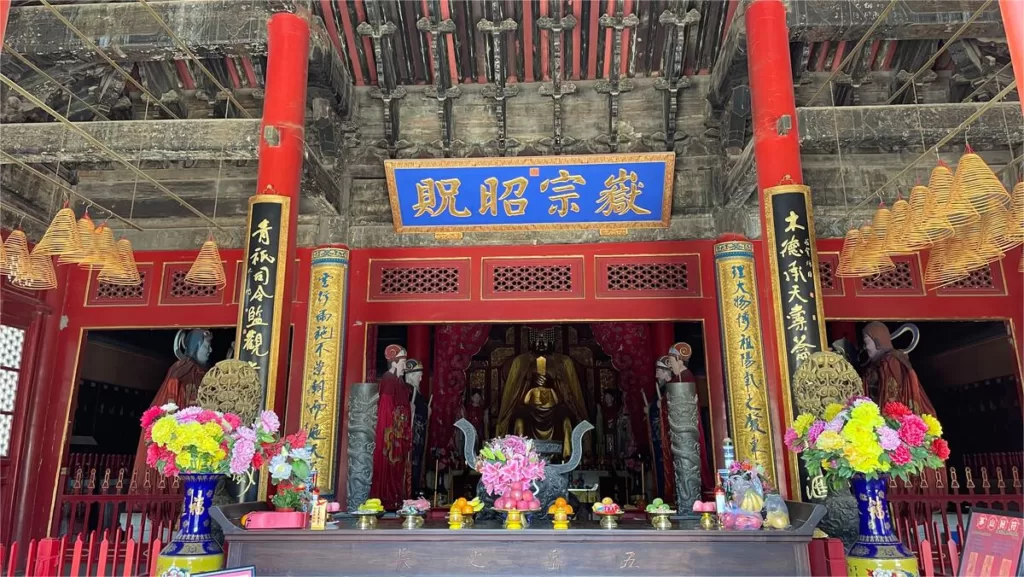



Baiyun Temple opens at 8:30 AM. In the morning, there are very few people, and there’s no need to queue at all. You can also chat with the Taoist priests.
It’s that time of the year again to seek blessings at the Baiyun Temple. This year, there are several times more people than in previous years! Last year, I went in the morning and felt like I arrived there quickly, but this year the lines turned several times! There will be one last chance to seek blessings on the 25th. The queue starts at 8:30 in the morning and ends at 2:30 in the afternoon.
Baiyun Temple wasn’t very crowded today; walking around inside felt neither cramped nor deserted. Although it was a bit chilly, the sunshine was great. Unfortunately, some halls were still under renovation and were not open to visitors.
In the past few years, I’ve visited Baiyun Templs many times. Usually, I just see a cat food bowl for feeding cats, but this time I encountered two lovely cats! The first one was very friendly and allowed me to pet it—its fur was even smoother than my own cat’s! It was lounging on a mat at the entrance of the Baoyuan Cave. The second cat was perched on the eaves of the Luzu Hall. I’m not sure if it… Read more »
There were eleven of us, which isn’t a large group. The sunlight was just right around 3 or 4 PM. We earnestly prayed for the health of our family at all the halls and unexpectedly stumbled upon a religious gathering with three Taoist priests in attendance. The atmosphere was filled with a soft mist, creating a serene and tranquil environment that made it worthwhile to spend a quiet afternoon there.
The Baiyun Temple in Beijing is the largest Taoist temple I have ever seen, with numerous halls, each manned by staff. The surroundings are tranquil and serene, and there are shared bicycles available outside, making transportation very convenient.
It is said that the area of Baiyun Temple is comparable to that of Yonghe Temple. However, unlike the crowded atmosphere at Yonghe Temple, Baiyun Temple offers a serene and peaceful environment with fewer visitors, creating a relaxed feeling.
Recently, I have been feeling unwell but couldn’t quite pinpoint the issue. Before the Chinese New Year, I planned to visit the White Cloud Taoist Temple but it was temporarily closed for some reason. Today, I went with my colleagues to visit the Taoist Clinic there. There weren’t many people, but registration required ID verification. I was attended by Master Liu, who was very kind and approachable without any airs. He started asking about my discomfort as soon as he… Read more »
Today I visited the White Cloud Temple in Beijing. The weather was great, and the journey there was very smooth. While waiting at a traffic light at an intersection, I saw someone flying a kite, so high up!
The White Cloud Temple (白云观) in Beijing is quite large. We originally planned to visit for an hour, but ended up spending more time taking photos. – Admission fee 10, which includes incense. There are many incense stands inside. We burned incense together at the beginning, but there are several different areas where you can burn incense in sets of three. – We saw a Taoist priest who looked somewhat like a young Yuan Hong, teaching martial arts. A truly… Read more »