
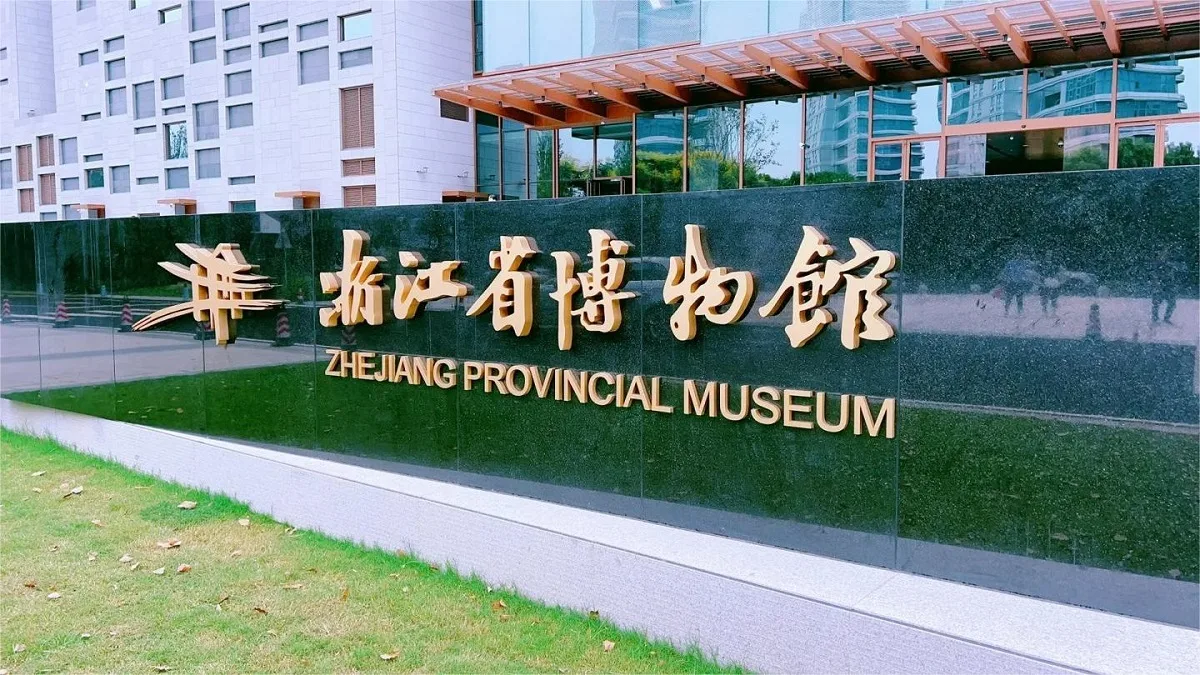
The Zhejiang Provincial Museum Zhijiang Branch (浙江省博物馆之江馆) is situated within the Hangzhou Zhijiang Cultural Center. With a total building area of 100,000 square meters and an exhibition area of 32,012 square meters, it stands at a height of 59.9 meters, making it the largest single building in the Zhijiang Cultural Center. It serves as a modern public cultural space that integrates collection, preservation, research, exhibition, publicity, education, and cultural experiences.
The museum’s “Ten Thousand Years of Zhejiang” exhibition provides a comprehensive historical overview constructed from archaeological findings and cultural relics, highlighting the significant moments in the history of Zhejiang. It showcases the origins of Zhejiang’s cultural contributions to Chinese and global civilizations, including the cultivation of rice, the production of silk, and the development of porcelain.
Additionally, the museum features five thematic exhibitions focused on various aspects of Zhejiang culture, such as celadon culture, maritime culture, Song dynasty culture, calligraphy and painting traditions, and the cultural legacies of prominent figures. These exhibitions decode the unique cultural genes of Zhejiang from different perspectives.
Moreover, the museum offers nine interactive and experiential exhibitions that are characterized by their individuality, diversity, and quality. These exhibitions not only incorporate elements of technology but also provide immersive experiences for visitors to engage with Zhejiang’s rich cultural heritage.
Table of Contents
- Basic Information
- Location and Transportation
- Highlights of Zhejiang Provincial Museum (Zhijiang)
- Vlog about Zhijiang Branch
Basic Information
| Estimated Length of Tour | 3 hours |
| Ticket Price | Free |
| Opening Hours | 9.00 – 17.00; Last admission: 16.30 |
| Telephone Number | 0086-0571-85391628 |
Location and Transportation
The Zhejiang Provincial Museum (Zhijiang Branch) is located in the Zhijiang Cultural Center, on the south side of the West Lake Scenic Area, near the Song Dynasty Town. Its precise address is Bibo Road, Xihu District, Hangzhou, Zhejiang Province.
Highlights of Zhejiang Provincial Museum (Zhijiang)
Ten Thousand Years of Zhejiang

This exhibition traces the history of Zhejiang province over ten millennia, presenting the most representative artifacts and cultural imprints from various historical periods. It highlights significant milestones such as the origins of rice cultivation, the flourishing Liangzhu culture spanning five millennia, the ancient Yue culture from two millennia ago characterized by diligent farming and warfare, the prosperous Song dynasty era, and the revolutionary movements symbolized by the Red Boat. Visitors can explore the “Zhejiang spirit” passed down through generations and witness the province’s contributions to the development of Chinese civilization.
Song Dynasty Culture

The Song dynasty represents a pinnacle of traditional Chinese culture, characterized by an open and inclusive cultural atmosphere and refined aesthetic pursuits. This exhibition delves into the political landscape of the Song dynasty, the intellectual world of scholars, and the diverse lifestyles of ordinary people. Visitors can immerse themselves in the elegance and sophistication of Song dynasty culture, which embodies both the grandeur of Chinese civilization and the distinctiveness of Zhejiang.
Ancient Celadon of Zhejiang

Zhejiang is renowned as the birthplace of celadon, with a history of celadon production dating back to the Han dynasty. Zhejiang celadon, known for its exquisite celadon hues and superb craftsmanship, has influenced global trends. This exhibition showcases masterpieces from Zhejiang’s renowned kilns, providing insights into the development of ancient celadon culture in the region. Visitors can appreciate the evolution of Zhejiang’s porcelain industry, its unique craftsmanship, and its significant impact on human civilization.
Traditional Wedding Customs and Dowry of the Ningbo-Shaoxing Plain

During the mid-Qing dynasty to the Republic of China era, the Ningbo-Shaoxing Plain was renowned for its extravagant bridal processions and elaborate dowries. The exhibition showcases the folk wedding customs of the Ningbo-Shaoxing region, where the tradition of displaying an extensive array of bridal furnishings, known as the “Ten-Mile Red Bridal Decorations,” adorned the landscape for miles. Visitors can explore the artifacts and learn about the rituals associated with marriage, from the preparations before the wedding to the roles of women as wives and mothers.
Guqin and the World of Chinese Music

The guqin, one of the world’s oldest plucked string instruments, exudes a deep and serene tone, embodying the essence of Confucian, Taoist, and Buddhist philosophies. It has been cherished by literati throughout history as a means of expressing emotions and ideals. This exhibition delves into the significance of the guqin in Chinese culture, highlighting its profound influence on the spiritual and aesthetic realms. Visitors can appreciate the cultural symbolism of the guqin as a representative of Eastern civilization.
Chinese Paintings Throughout Dynasties

The “Compendium of Chinese Painting Throughout Dynasties” showcases a vast collection of Chinese paintings from 263 cultural institutions worldwide, encompassing 12,405 pieces. This comprehensive collection includes both domestic and overseas masterpieces, spanning various historical periods. The publication of volumes such as “Complete Works of Pre-Qin, Han, and Tang Dynasty Paintings” and “Complete Works of Song Dynasty Paintings” represents the most extensive compilation of Chinese painting masterpieces to date. Visitors can marvel at the diverse styles and themes depicted in these exquisite artworks, gaining a deeper appreciation for the evolution of Chinese painting throughout history.

The Zhejiang Provincial Museum, Zhi Jiang Pavilion is quite large. I spent about three hours there quickly checking off some of the museum’s treasures. If you want to explore thoroughly, it might take over five hours!
The special exhibition ticket costs 68 yuan. The first exhibition hall displayed a few flower and bird paintings, while the second and third exhibition halls featured replicas and digital images, which were rather average. The Zhejiang Ten Thousand Years exhibition (浙江一万年) was quite good, and the top ten treasures of the museum are worth seeing. Unfortunately, there are some replicas, including a separate exhibition hall dedicated to the “Fuchun Mountain Residence: Remaining Mountain Scroll”, which also presented a replica, leaving… Read more »
I managed to visit both “Ten Thousand Years of Zhejiang” and the special exhibition. The ticket for the temporary exhibition “Questions on Feathers” is quite expensive, and since I’m not really interested in calligraphy and painting, I decided to skip it. There will be a new exhibition at the Gu Mountain Pavilion next month, and a new exhibition at the Hangzhou Museum has also opened. I’ll go again in December!
The History Museum has three exhibition halls. Due to time constraints, I only managed to glance through them. I didn’t have time to visit the third and fourth floors… The new venue is very spacious, and I feel there is still a lot of potential for development.
Today is the Mid-Autumn Festival holiday, and there are a lot of people. I waited in line for about 50 minutes.
During the weekends of summer vacation, there are really too many people. Even though there is such a rich collection, I could only take a quick glance around.
The Zhejiang Provincial Museum has been so crowded these past few days! Especially now during the summer vacation . It’s filled with kids of all ages.
First time visiting the Zhijiang Branch of Zhejiang Provincial Museum, it is massive, truly massive. One day is not enough to explore it all. We tirelessly wandered until 3 pm, when my husband and I were completely exhausted and had to sit in the reading area to nap and rest.
Upon entering the museum, pay attention to the two screens in the lobby, this is crucial. The big screen displays “Today’s Zhijiang” (今日之江), while the small screen shows the schedule for guided tours on that day. 1️⃣ The big screen provides detailed information about the museum, including daily visitor numbers, real-time numbers of visitors in each exhibition hall, crowd density, suggested tour routes, and the locations of notable artifacts; its design is both aesthetically pleasing and practical. 2️⃣ The small… Read more »
The treasures of each level are as follows: 1st Floor Exhibition Hall A: From Prehistoric Times to the Sui and Tang Dynasties – Ivory dish with double birds and sun patterns (Hemudu Site of the Neolithic Age) – Liangzhu Culture jade cong king (Neolithic Age) – Spring and Autumn Period bronze model of a music and dance house – Warring States period Yue King’s directive for a sword 2nd Floor Exhibition Hall B (Wuyue and Song Dynasties) – Ayuwang Pagoda… Read more »