
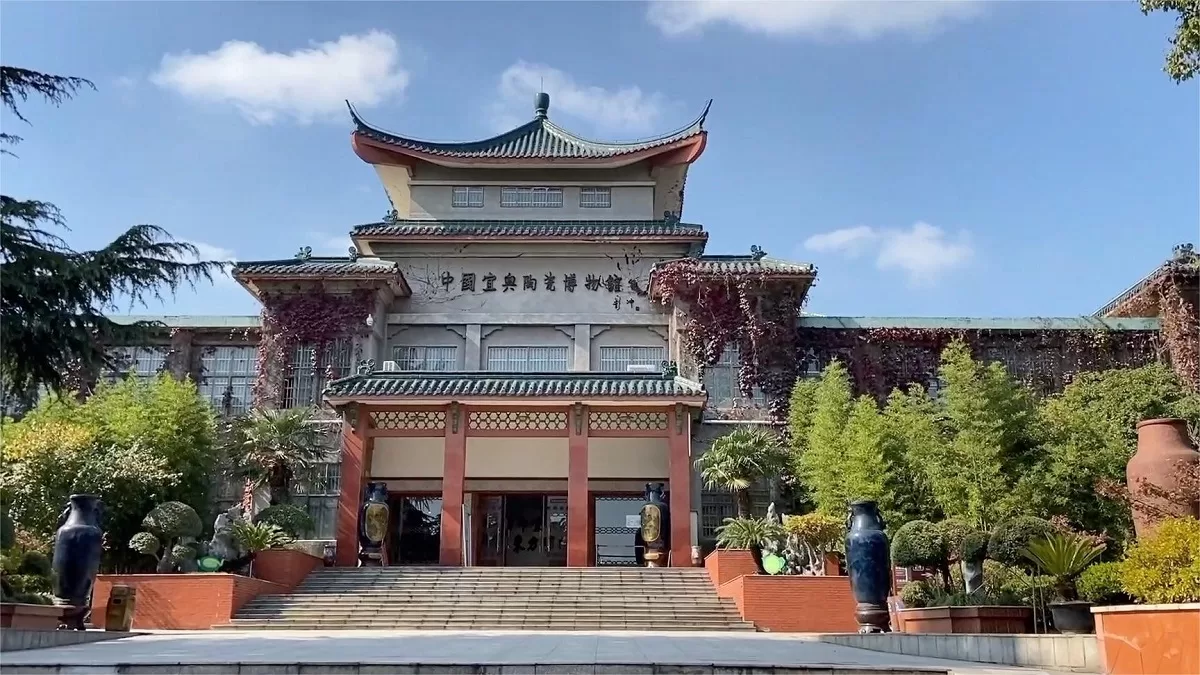
The Yixing Ceramics Museum (宜兴陶瓷博物馆), situated in the heart of Yixing, China, is a testament to the rich history and vibrant culture of ceramics in this region. Established as the first specialized ceramic museum in China, it traces its roots back to the Yixing Ceramic Company Exhibition Room and the Yixing Ceramic Exhibition Hall. With nearly half a century of history, this museum stands as a guardian of the remarkable heritage of Yixing ceramics.
Comprising sixteen distinct exhibition halls, the museum takes visitors on a captivating journey through time and artistry. The halls are dedicated to various aspects of ceramics, including ancient ceramics, renowned masterpieces, purple clay teapots, exquisite ceramics, colorful ceramics, celadon, industrial sanitary ceramics, world ceramics, and domestic ceramics. These galleries house over 8,000 ceramic items, providing a dazzling showcase of contemporary Yixing ceramic culture and the masterful art of pottery.
Table of Contents
- Basic Information
- Location and Transportation
- Highlights of YIxing Ceramics Museum
- Video about Yixing Purple Clay Teapot
- Useful Tips Summarized from reviews
- Other Attractions in Yixing
Basic Information
| Website | https://www.yxtcbwg.com/ |
| Estimated Length of Tour | 2 – 3 hours |
| Ticket Price | 5 RMB |
| Opening Hours | 8.30 – 17.00; Last admission: 16.00 (Tuesday – Sunday) 13.30 – 17.00; Last admission: 16.00 on Mondays Closed on the first Monday of each month |
| Telephone Number | 0086-0510-87188255 |
Location and Transportation
The Yixing Ceramics Museum is located at the southern suburb of Yixing, Jiangsu Province. The exact address is No. 150, Dingshan North Road, Dingshu Town, Yixing, Wuxi, China. Tourists can take bus Yixing 152, Yixing 154, Yixing 201, Yixing 245, or Yixing 249, get off at Ceramics Museum Stop (陶瓷博物馆站), and walk about 200 meters to the northwest to reach the museum.
Highlights of YIxing Ceramics Museum
City of Ceramics

Yixing boasts an enduring history of ceramic production and a thriving ceramic culture, both of which are vividly portrayed through the museum’s collection. Spanning over 7,000 years from the mid-Neolithic period to the present day, ceramics have been an integral part of Yixing’s identity. The region’s skilled artisans have nurtured the creation of extraordinary art pieces, with a legacy that includes Han Dynasty pottery, Jin Dynasty celadon, Song and Ming Dynasty jun wares, and Ming and Qing Dynasty purple clay teapots. The contemporary era is represented by colorful glaze ceramics, fine arts ceramics, and exquisite ceramics, all of which emphasize Yixing’s grace and its distinguished status as the “City of Ceramics.”
Masterpiece Gallery

The emergence of purple clay pottery and the maturity of jun glaze ceramics in the Ming and Qing Dynasties, along with the active participation of literati, created a unique character for Yixing ceramics. As civilization progressed, artisans began to prioritize aesthetics in addition to functionality when crafting everyday items. These ceramics reflect an innate pursuit of balanced form, pleasing colors, and cultural sensibilities in design. The dignified and elegant appearance of purple clay teapots, blending calligraphy, painting, and traditional motifs, as well as the profound grace and refined decorative art of jun glaze ceramics, highlight the rich cultural heritage.
The Masterpiece Gallery showcases a diverse selection of precious artifacts, offering a condensed glimpse into Yixing ceramic culture and its historical significance.
Celadon Gallery

Yixing’s celadon production dates back to the Western Zhou period (11th century BC to 771 BC), with the craft achieving significant refinement during the Jin Dynasty (265-420). The Sui and Tang Dynasties (581-907) saw a proliferation of celadon varieties, a marked increase in production, and highly skilled craftsmanship. Yixing celadon is characterized by its fine texture, lustrous glaze with hints of blue, and an appearance resembling crystal-clear water, akin to the colors of emerald peaks and azure waters. Its elegant and graceful designs exude sophistication and charm. A wide range of traditional and innovatively designed products in the Celadon Gallery reflects the remarkable achievements of Yixing celadon.
Purple Clay Teapot Gallery

The history of Yixing purple clay pottery can be traced back to the middle of the Song Dynasty (960-1270). The proliferation of purple clay teapots began during the middle of the Ming Dynasty (1368-1644). In addition to teapots, the category includes basins, bottles, writing tools, sculptures, and more. Purple clay is an unglazed ceramic known for its fine texture, high iron content, excellent malleability, and a firing temperature higher than that of typical ceramics. Its physical properties and permeability make it ideal for steeping tea, allowing the pure aroma of the tea to be fully released. The rise of purple clay teapots was intertwined with the literati class, gradually endowing them with artistic value.
Jun Glaze Ceramics Gallery

Yixing jun glaze ceramics, also known as Yijun ceramics, were famous for their unique production techniques, elegant shapes, and distinctive glaze colors during the Song Dynasty (960-1279). Notable kilns in history include the “Ouyao” from the Jiajing and Wanli periods of the Ming Dynasty and the “Geyao” from the Qianlong and Jiaqing periods of the Qing Dynasty. Jun glaze ceramics are renowned for their beautiful glaze colors, including blue, red, copper, and white, with blue jun being particularly prized. These ceramics primarily feature practical items for gardens and courtyards, reflecting a rich ethnic style and folk craftsmanship.
Video about Yixing Purple Clay Teapot
Useful Tips Summarized from reviews
Exquisite Purple Clay Crafts: The museum displays a wide variety of crafts made from purple clay, including lifelike sculptures of creatures like lobsters, cicadas, and mantises. Each piece is described as being highly detailed and lifelike, truly considered as exquisite masterpieces.
Historical Context – Shushan Ancient Street: Near the museum, Shushan Ancient Street is highlighted as a significant area from the Ming and Qing periods, serving as a major distribution center for Yixing ceramics and the birthplace of purple clay culture. Many of the historical buildings have been transformed into diverse studios, each maintaining the tradition of crafting pottery.
Hands-On Experience in Shushan Ancient Street: Visitors have the opportunity to try their hand at making purple clay teapots or cups in the studios along Shushan Ancient Street. It’s mentioned that children typically engage in cup making (around 2 hours), while adults can try their hand at teapot making (around 4 hours). Reservations are recommended for these activities.
Closing Time Consideration: Many shops on Shushan Ancient Street start closing around six or seven in the evening, so visitors should be mindful of the time to avoid missing out on any experiences or purchases.




It costs 5 yuan per person, which is reasonable, but there are a lot of uncivilized people here. It’s the first time I’ve encountered such a noisy museum, and some people even touched and photographed the exhibition items. There were even parents allowing their children to stand on the display stands.
The museum features original purple clay, an art exhibition of purple clay sculptures from the Winter Olympics, a variety of colorful Jun porcelain, and national treasure-level works of purple clay teapots by various masters. There are also modern ceramic art pieces. For just 5 yuan, I spent a long time exploring! I highly recommend it!
Here you’ll find the main Ceramic History Hall, galleries showcasing works from renowned artists, both domestic and international ceramic exhibition halls, galleries featuring ceramics and Zisha (紫砂) works, as well as temporary exhibition spaces. The main focus is on viewing various pots and jars, while the secondary activity involves accompanying children on a stamp-collecting adventure. A casual stroll can easily take up half a day.
I spent the last two days of summer vacation in Yixing, the city of ceramics.
The first stop had to be the Ceramic Museum to learn about the history and craftsmanship of Yixing pottery and admire masterpieces by renowned masters. The entrance ticket is definitely worth it.
The Yixing Ceramic Museum is a great place for a family visit, as children find everything to be quite fascinating.
The museum has three large floors, organized into different exhibition areas.
The environment is pleasant and air-conditioned, making it a comfortable place to explore.
It provides a wonderful opportunity to cultivate an appreciation for art while enjoying the exhibits.
We took a taxi to Yixing Ceramic Museum. However, due to limited time, we couldn’t look closely. But it is quite a feast to our eyes.
I took a quick look around for about half an hour. It takes more time to look carefully, but I was a bit hungry, so I quickly finished looking around.
I have visited many museums before, and Chinese ceramics are quite common. I pretty much know what they look like, so at first, I didn’t find the Ceramics Museum very special. However, I soon found I was wrong. One highlight of the museum is the introduction to Yixing purple clay (紫砂) making technique and the various displays of purple clay products. The production process is very complex, involving dozens of tools and over a dozen steps. I heard from a… Read more »
As a tourist, I have to say that the Ceramic Museum in Yixing really doesn’t have much to offer. Most of the collections are modern pieces, and the old artifacts are borrowed from the National Museum. The building is not grand either, just three floors. Compared to other attractions in Yixing like the Da Jue Temple and Dongpo Pavilion, it looks really dilapidated. It seems like the museum is really lacking in funds. The interior decoration and arrangement are not… Read more »
For friends who are interested in ceramics and purple clay teapots, you must visit the Yixing Ceramic Museum! It will make you experience the millennium-old pottery capital, showcasing exquisite artworks crafted by numerous skilled artisans!